


Ankle pain that does not settle is not always a simple sprain. When pain, swelling, catching or a feeling of giving way continues despite appropriate treatment, a problem inside the ankle joint may be responsible.
Ankle arthroscopy is a minimally invasive procedure used to diagnose and treat several conditions affecting the ankle joint. At Mangal Anand Hospital, Chembur, ankle arthroscopy is performed by experienced foot and ankle surgeons, including Dr. Dhrumin Sangoi and Dr. Shyam Thakkar. The procedure is considered when symptoms persist and examination and imaging suggest that surgery may help.
Mangal Anand Hospital, Mumbai provides ankle arthroscopy care for patients from Chembur, Ghatkopar, Kurla, Sion, Wadala, Govandi, Tilak Nagar, Vidyavihar, Navi Mumbai and other parts of Mumbai and Navi Mumbai.
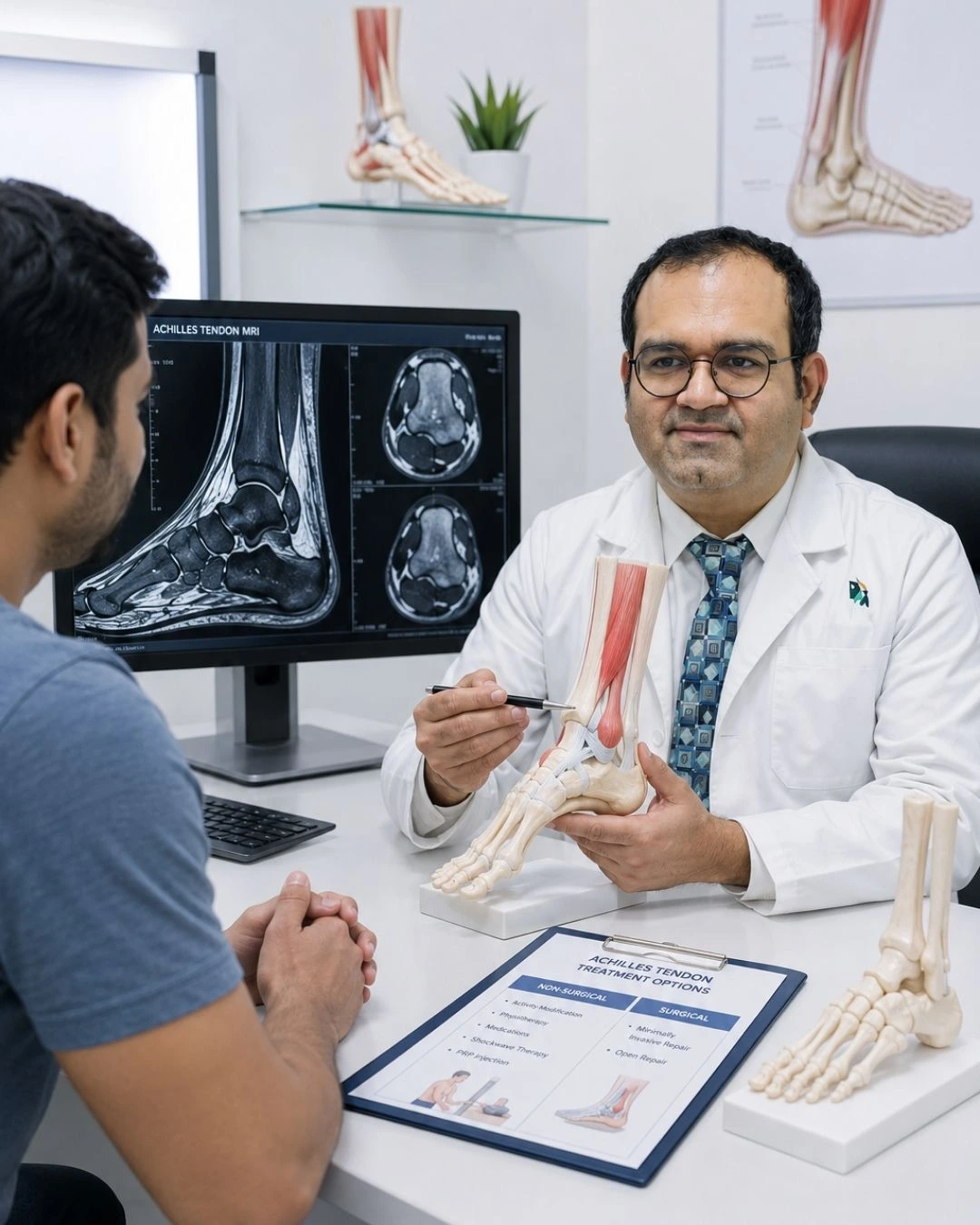
Ankle arthroscopy is a minimally invasive surgical procedure used to examine and treat problems inside the ankle joint. Instead of making a large incision, the surgeon makes small openings called portals through which a small camera, called an arthroscope, and specialised surgical instruments are introduced.
The camera provides a magnified view of the structures inside the joint on a monitor. This allows the surgeon to identify problems and, when appropriate, treat them during the same procedure.
Ankle arthroscopy may be used to remove loose bodies, treat ankle impingement, address damaged cartilage or bone, remove inflamed tissue and perform other procedures depending on the underlying condition. Ankle arthroscopy is one type of keyhole joint surgery. It is different from knee arthroscopy and other arthroscopic procedures because the anatomy, portals and conditions treated are specific to the ankle.
Read more: Arthroscopy Surgery in Chembur, Mumbai
The decision to perform ankle arthroscopy is based on the patient's symptoms, clinical examination, imaging findings and response to non-surgical treatment. Not every ankle problem requires surgery. When surgery is appropriate, the specific arthroscopic procedure depends on what is causing the symptoms.
Dr. Dhrumin Sangoi is an orthopaedic surgeon specialising in foot and ankle surgery. He has completed advanced training and fellowships in foot and ankle surgery and ankle arthroscopy in the UK and Europe.
His qualifications and training include MBBS, MS Orthopaedics, MRCS and FRCS (Tr & Ortho), along with fellowship training at recognised foot and ankle centres.
His clinical interests include ankle arthroscopy, sports-related foot and ankle conditions, ankle instability, cartilage and ligament injuries, and reconstructive foot and ankle surgery.

Dr. Shyam Thakkar is an experienced orthopaedic surgeon specialising in foot and ankle surgery. He has advanced training in foot and ankle procedures and experience in managing a wide range of ankle and foot conditions, including conditions that may require arthroscopic treatment.
His practice includes the assessment and surgical management of ankle injuries, instability, impingement and other foot and ankle conditions.
Both surgeons assess patients individually to determine whether non-surgical treatment is appropriate or whether a procedure such as ankle arthroscopy may be beneficial.

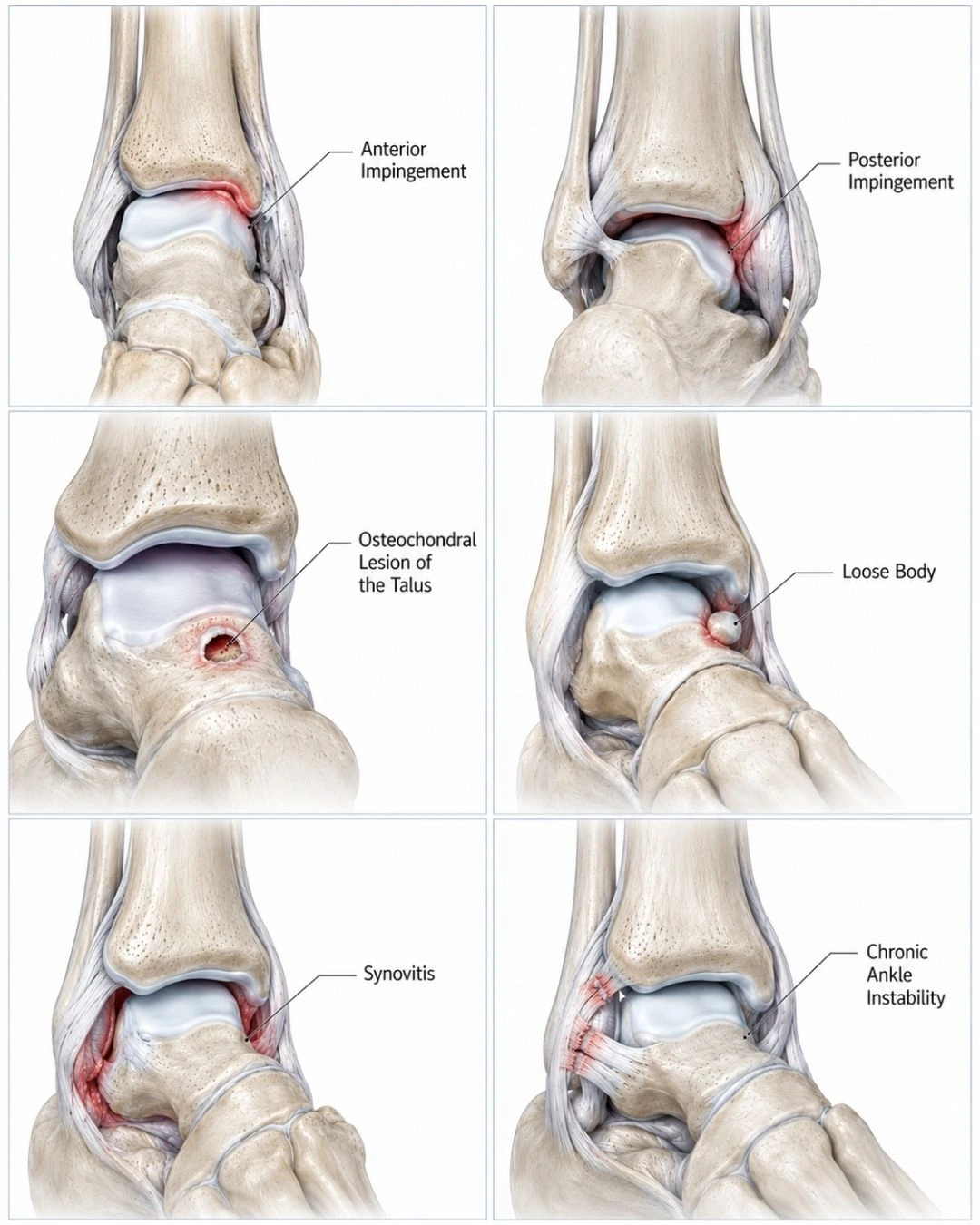
Ankle arthroscopy can be used to treat several conditions affecting the ankle joint. The exact procedure depends on the underlying problem and the structures involved.
Anterior ankle impingement causes pain at the front of the ankle, particularly when the ankle is moved upwards or during activities such as running, squatting or climbing stairs. It may be associated with bone spurs, thickened soft tissue or previous ankle injuries. During arthroscopy, the surgeon can assess the joint and, when appropriate, remove problematic bone or inflamed tissue causing the impingement.
Posterior ankle impingement causes pain at the back of the ankle, often when pointing the foot downwards. It can occur in people involved in activities that repeatedly require this movement, including dancers and athletes. An os trigonum, an accessory bone behind the ankle, can contribute to posterior impingement in some patients. When it is responsible for persistent symptoms, it may be removed arthroscopically.
An osteochondral lesion involves damage to the cartilage and underlying bone of the talus. It can develop after an ankle injury or repeated stress and may cause persistent pain, swelling, catching or difficulty with weight-bearing. Depending on the size and characteristics of the lesion, arthroscopy may be used to assess the cartilage and treat the damaged area.
Small fragments of bone or cartilage can become loose inside the ankle joint following an injury, cartilage damage or degenerative changes. These loose bodies may cause pain, catching or locking. Arthroscopy allows the surgeon to identify and remove them through small incisions.
Synovitis is inflammation of the synovial lining of the ankle joint. It may cause swelling, pain and restricted movement. When persistent synovitis does not respond adequately to non-surgical treatment and an arthroscopic procedure is appropriate, inflamed tissue can be assessed and removed during surgery.
Repeated ankle sprains can damage the ligaments that stabilise the ankle. Some patients continue to experience a feeling of the ankle giving way even after rehabilitation. Ankle arthroscopy may be used to assess the joint and treat associated problems. Where ligament reconstruction is required, arthroscopy may be performed alongside the appropriate ligament procedure.
Scar tissue, adhesions or other changes inside the joint can contribute to restricted ankle movement following a fracture or previous surgery. In selected patients, arthroscopy can be used to assess and treat problems contributing to persistent stiffness.
In selected patients with early ankle arthritis, arthroscopy may have a role in treating associated problems such as loose bodies, inflamed tissue or impingement. The suitability of arthroscopy depends on the extent of joint damage and the individual patient's symptoms and examination findings.
Ankle arthroscopy is performed through small incisions around the ankle. The exact technique depends on the condition being treated and whether any additional procedure is required. Before surgery, the surgeon reviews the patient's symptoms, examination findings and imaging to determine the appropriate surgical plan.
Ankle arthroscopy may sometimes be combined with another procedure, such as ligament reconstruction, when the underlying condition requires additional treatment.
Ankle arthroscopy is performed through small openings called portals. These provide access for the arthroscope and surgical instruments. The position of each portal depends on the part of the ankle being examined or treated. Common approaches include anteromedial and anterolateral portals for the front of the ankle, while posterior approaches may be used for selected conditions affecting the back of the ankle.
Portal placement requires careful planning because nerves, tendons and blood vessels are located close to the ankle joint. The surgeon selects the appropriate portals according to the patient's anatomy and the procedure being performed.
Recovery after ankle arthroscopy varies depending on the condition treated, the procedure performed and whether any additional surgery was required. Your surgeon will provide specific instructions regarding weight-bearing, movement, wound care and rehabilitation.
A typical recovery may include:
First few days:
Pain and swelling are common after surgery. The ankle may need to be elevated, and weight-bearing may be restricted depending on the procedure.
First two weeks:
The focus is on wound healing, controlling swelling and gradually restoring ankle movement. Follow-up is usually arranged to assess healing and progress.
Weeks 2–6:
Weight-bearing and activity are gradually increased when appropriate. Physiotherapy may focus on ankle movement, strength and control.
Weeks 6–12:
Strengthening, balance and functional exercises are progressed according to recovery and the procedure performed.
Beyond three months:
Patients gradually return to higher-level activities and sport when adequate strength, movement and stability have been restored.
Recovery timelines are not the same for every ankle arthroscopy patient. Procedures involving cartilage treatment, ligament reconstruction or other additional surgery may require a longer period of protected weight-bearing and rehabilitation.
Physiotherapy is an important part of recovery for many patients following ankle arthroscopy. The rehabilitation programme is tailored to the procedure performed and may include:
The goal is to help restore movement, strength, stability and function while allowing the treated tissues to heal appropriately. The timing of each stage should be guided by the operating surgeon and physiotherapist rather than following a fixed recovery schedule.
Ankle arthroscopy is generally considered a safe procedure when performed for an appropriate indication, but no surgery is completely free of risk. The possible complications depend on the procedure performed, the patient's health and other individual factors.
Potential risks may include:
The surgeon will discuss the relevant risks and expected benefits with you before surgery. Any additional procedure performed along with ankle arthroscopy may have its own specific risks.
The cost of ankle arthroscopy in Mumbai varies from patient to patient. It depends on factors such as:
If you have health insurance, ankle arthroscopy may be covered when medically indicated, subject to the terms of your policy and approval from your insurer.
Mangal Anand Hospital in Chembur, Mumbai provides orthopaedic and foot and ankle care, including assessment, surgical treatment and rehabilitation. Patients are evaluated before surgery to understand the cause of their symptoms and determine the most appropriate treatment. Where ankle arthroscopy is indicated, the surgical plan is based on the specific condition rather than using the same procedure for every patient.
The hospital serves patients from Chembur, Ghatkopar, Kurla, Sion, Wadala, Govandi, Tilak Nagar, Vidyavihar, Navi Mumbai and surrounding areas of Mumbai Thane and Navi Mumbai.
.
Care may include:
The aim is to address the underlying ankle problem while providing appropriate guidance through recovery and return to normal activity.
Ankle arthroscopy is a minimally invasive procedure used to examine and treat problems inside the ankle joint. A small camera and specialised instruments are introduced through small incisions around the ankle.
It may be recommended when ankle pain, swelling, stiffness, catching or instability continues despite appropriate non-surgical treatment and there is an identifiable problem that can be treated arthroscopically.
Depending on the condition, ankle arthroscopy may be used to treat ankle impingement, loose bodies, synovitis, selected osteochondral lesions of the talus, joint stiffness and other problems affecting the ankle joint.
The operating time varies according to the condition being treated and whether another procedure is performed at the same time. Many procedures take approximately 45 to 90 minutes, although the actual duration may vary.
Some pain and swelling are expected after surgery. Pain medication, elevation and other measures are used to keep discomfort under control during the initial recovery period. The level of discomfort varies depending on the procedure performed.
The timing of weight-bearing depends on the procedure. Some patients can begin weight-bearing relatively early, while others may need to use crutches and avoid or limit weight-bearing for several weeks. Your surgeon will provide instructions based on the procedure performed.
Recovery varies according to the condition treated and the type of surgery performed. Some patients return to routine activities within several weeks, while procedures involving cartilage treatment or additional ligament surgery may require a longer rehabilitation period.
Physiotherapy is commonly recommended to restore ankle movement, strength, balance and function. The rehabilitation programme and when it begins depend on the procedure and your individual recovery.
Ankle arthroscopy may have a role in selected patients with early ankle arthritis, particularly when problems such as loose bodies, inflamed tissue or impingement are contributing to symptoms. It is not suitable for every patient with ankle arthritis.
Possible complications include infection, bleeding, nerve irritation, blood clots, persistent swelling or pain, stiffness, wound-healing problems and recurrence of the underlying condition. Your surgeon will discuss the relevant risks before surgery.
Yes. When chronic ankle instability is caused by ligament damage that requires reconstruction, ankle arthroscopy may be performed along with the appropriate ligament procedure. The treatment plan depends on the individual patient's condition.
Return to sport depends on the condition treated, the procedure performed and recovery of strength, movement and stability. Higher-impact activities should be resumed gradually after clearance from the treating surgeon and physiotherapist.
There is no single success rate that applies to every ankle arthroscopy procedure. Outcomes depend on the underlying condition, extent of joint or cartilage damage, procedure performed and rehabilitation. Your surgeon can discuss the expected outcome based on your specific diagnosis.
Many ankle sprains improve with appropriate non-surgical treatment and rehabilitation. Surgery is considered only when symptoms or instability persist and there is a specific structural problem that requires surgical treatment.
Depending on the underlying condition, your treatment may involve procedures other than ankle arthroscopy. Explore related treatments and conditions:
The appropriate treatment depends on your symptoms, examination findings and imaging.
Persistent ankle pain, swelling, stiffness or instability should be evaluated when it does not improve with appropriate treatment.Consult a foot and ankle surgeon at Mangal Anand Hospital, Chembur, Mumbai to understand the cause of your symptoms and whether ankle arthroscopy or another treatment is appropriate.
Book an appointment for ankle arthroscopy consultation at Mangal Anand Hospital.
Call the hospital or use the appointment booking form option to schedule your consultation.
Mangal Anand Hospital is located in Chembur, Mumbai, and is conveniently accessible for patients from Ghatkopar, Kurla, Tilak Nagar, Sion, Wadala, Govandi, Deonar and Navi Mumbai.