


Persistent shoulder pain can make even simple activities such as combing your hair, reaching overhead, lifting groceries, or getting a good night's sleep difficult. While many shoulder problems improve with medication, physiotherapy, and lifestyle modifications, severe joint damage may eventually require surgical treatment.Shoulder replacement surgery is an established procedure for patients with advanced arthritis, irreparable joint damage, or complex shoulder fractures that no longer respond to conservative treatment. The goal is not simply to replace the damaged joint but to restore movement, reduce pain, and help patients return to their daily routine with greater confidence.
At Mangal Anand Hospital, Chembur, our orthopaedic team provides comprehensive evaluation, evidence-based treatment, and personalised rehabilitation for patients requiring shoulder replacement surgery. Every treatment plan is developed after carefully assessing the condition of the shoulder joint, overall health, activity level, and individual recovery goals.
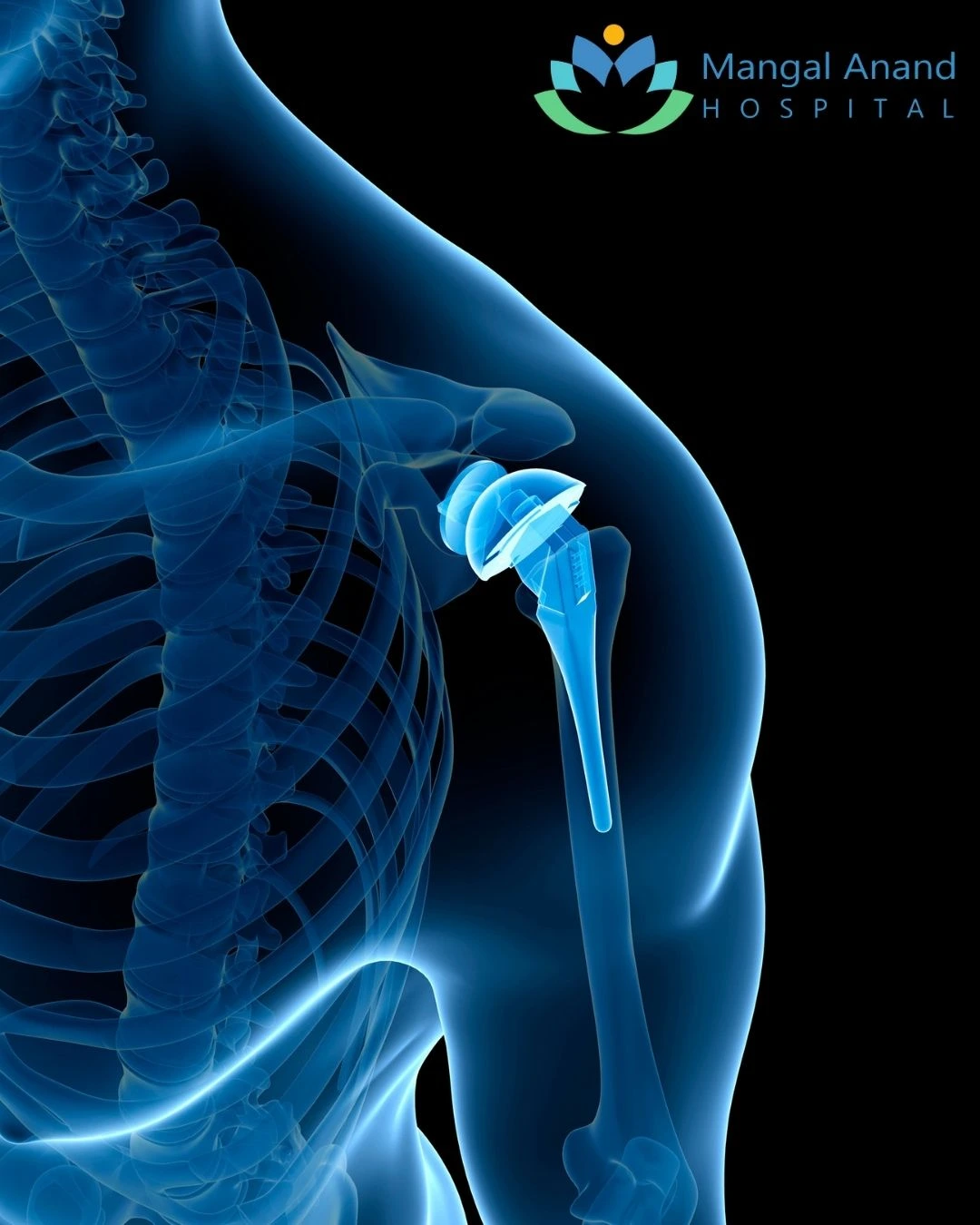
Shoulder replacement surgery, also known as shoulder arthroplasty, is a surgical procedure performed to replace damaged portions of the shoulder joint with specially designed artificial implants. These implants are made from durable medical-grade materials that are designed to restore joint movement while reducing pain caused by damaged cartilage and bone.
The shoulder is one of the most mobile joints in the human body. This remarkable range of movement allows you to perform everyday tasks such as lifting, throwing, reaching, pushing, and pulling. However, this mobility also makes the joint vulnerable to degeneration, arthritis, injuries, and fractures.
When the smooth cartilage covering the joint wears away or the joint becomes severely damaged, movement becomes painful and restricted. Patients often experience persistent pain even while resting or sleeping. In such situations, replacing the damaged joint surfaces may offer long-term pain relief and improved shoulder function.
Depending on the underlying condition, only a part of the shoulder joint may require replacement, while some patients may benefit from replacing both the ball and socket components of the joint.
Shoulder replacement surgery is recommended only after a thorough clinical evaluation and when appropriate non-surgical treatments have not provided satisfactory relief.
Successful shoulder replacement surgery depends on more than the surgical procedure itself. Careful diagnosis, appropriate patient selection, meticulous surgical planning, and structured rehabilitation all contribute to long-term outcomes.At Mangal Anand Hospital, shoulder replacement surgery is performed by orthopaedic surgeons with expertise in shoulder arthroscopy, arthroplasty, sports injuries, and complex joint reconstruction. Every patient receives an individualised treatment plan based on their symptoms, imaging findings, functional requirements, and overall health.
Dr. Sanjay Singh specialises in the diagnosis and treatment of shoulder, elbow, and knee disorders, with advanced training in arthroscopic (keyhole) surgery and shoulder replacement.
After completing his orthopaedic training at PGIMS Rohtak and Mumbai, he pursued a Fellowship in Shoulder & Elbow Surgery in Italy, where he received advanced exposure to modern shoulder reconstruction techniques. He has also worked as a Sports Medicine Consultant at Max Super Speciality Hospital, Mohali, managing shoulder injuries in professional athletes across multiple sports.
His areas of clinical interest include:

Dr. Nikhil Gokhale completed his medical education at the prestigious G.S. Medical College and K.E.M. Hospital, Mumbai, graduating with multiple distinctions and a Gold Medal in Surgery.
He subsequently underwent advanced subspecialty training in the United Kingdom through the National Health Service (NHS), including a dedicated Shoulder Fellowship at Royal Bournemouth Hospital and specialised training in revision joint replacement surgery at the Royal National Orthopaedic Hospital, Stanmore.
His qualifications include Membership and Fellowship of the Royal College of Surgeons of Edinburgh (MRCS, FRCS) and a Diploma in Computer-Assisted Orthopaedic Systems from Glasgow.
With experience in more than 2,500 orthopaedic procedures, Dr. Gokhale has a special interest in:
He is actively involved in clinical research and evidence-based orthopaedic practice.
Dr. Pradip Nemade specialises in arthroplasty, arthroscopy, trauma surgery, and sports injury management. His clinical practice includes the treatment of complex shoulder disorders, ligament injuries, cartilage injuries, and fracture management.
His areas of expertise include:
Together, the orthopaedic team works closely with anaesthetists, physiotherapists, nursing staff, and rehabilitation specialists to provide coordinated care throughout the treatment journey.
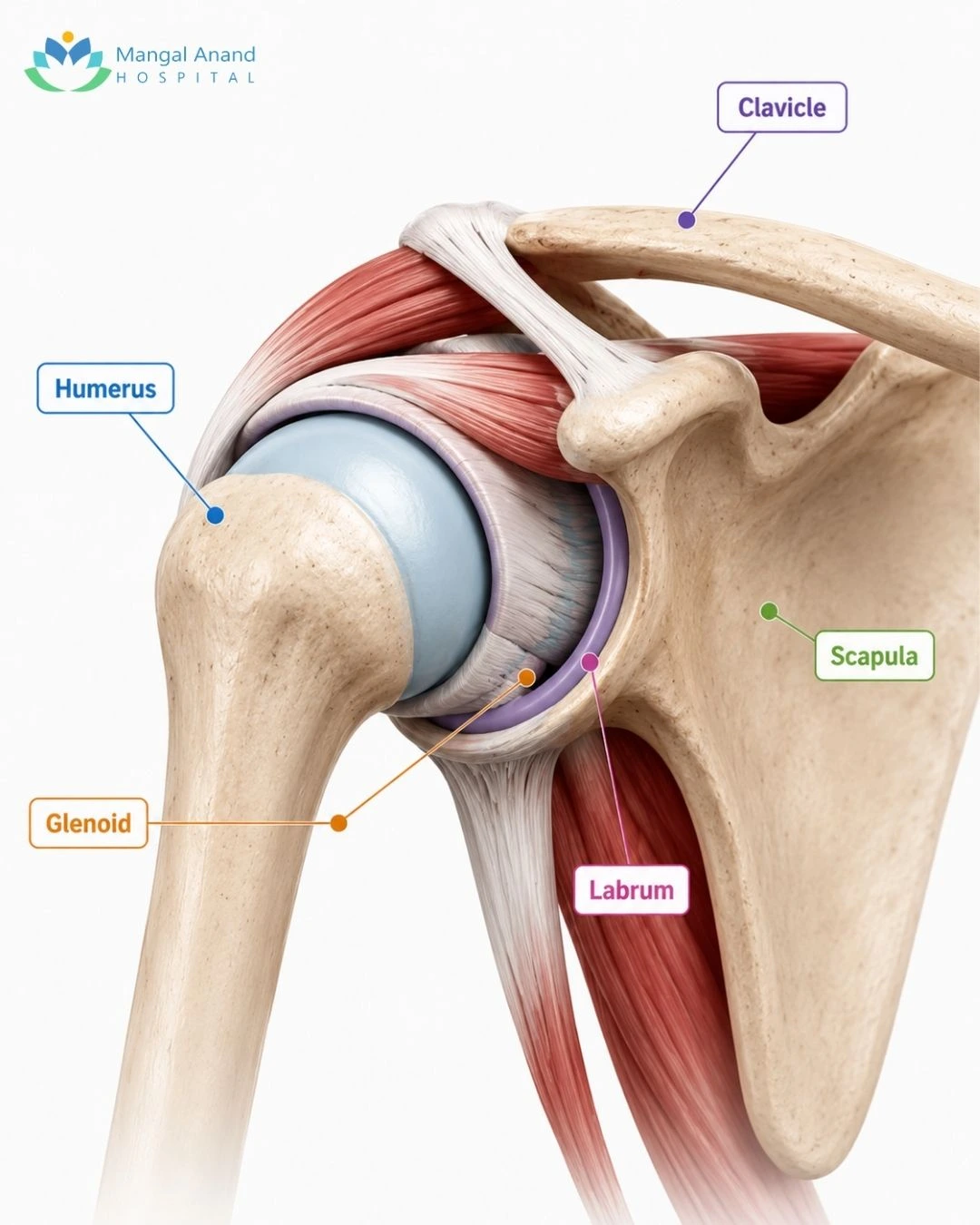
Understanding how the shoulder works helps explain why certain conditions eventually require joint replacement.
The shoulder is a ball-and-socket joint formed by three bones:
The rounded head of the humerus fits into a shallow socket called the glenoid, allowing the shoulder to move in multiple directions.
Several important structures work together to keep the shoulder stable and pain-free:
When cartilage gradually wears away because of arthritis or when major injuries damage these supporting structures, the bones begin rubbing against each other. This can lead to pain, stiffness, swelling, weakness, and progressive loss of shoulder movement.
If the damage becomes advanced and conservative treatment no longer provides relief, shoulder replacement surgery may become an appropriate treatment option.
Not every shoulder problem requires surgery. Many conditions improve with physiotherapy, medications, injections, or activity modification. However, certain symptoms may indicate that the shoulder joint has sustained significant damage.
You should consult an orthopaedic specialist if you experience:
Pain that continues for several months despite medication, physiotherapy, or injections should be evaluated further. Pain may occur during activity or even while resting.
Simple movements such as reaching overhead, combing your hair, wearing clothes, or lifting lightweight objects may become increasingly difficult.
Pain severe enough to wake you during the night is a common symptom of advanced shoulder arthritis and other serious shoulder disorders.
Many patients gradually lose the ability to rotate or raise their shoulder, making routine activities challenging.
Weakness may develop because of arthritis, rotator cuff damage, or progressive degeneration of the joint.
A damaged joint may produce grinding or clicking sounds during movement due to worn cartilage or irregular joint surfaces.
If symptoms continue despite appropriate physiotherapy, medications, lifestyle modifications, and injections, surgical treatment may need to be considered.
These symptoms do not automatically mean that shoulder replacement surgery is required. A detailed clinical examination and appropriate imaging investigations help determine the exact cause of pain and the most suitable treatment plan.
Several conditions can progressively damage the shoulder joint and affect its normal function. Identifying the underlying cause is essential because treatment recommendations differ for each patient.
Osteoarthritis is one of the most common reasons for shoulder replacement surgery. It occurs when the protective cartilage covering the ends of the bones gradually wears away over time.
As the cartilage becomes thinner, the bones begin rubbing against each other, leading to:
Patients often notice worsening symptoms over several years before considering surgical treatment.
Rheumatoid arthritis is an autoimmune condition in which the body's immune system attacks the lining of the joints.
Long-standing inflammation can damage cartilage, weaken surrounding tissues, and gradually deform the shoulder joint. In advanced cases, shoulder replacement surgery may help reduce pain and improve function when medical management alone is no longer sufficient.
The rotator cuff is a group of muscles and tendons responsible for stabilising and moving the shoulder.
Long-standing or massive rotator cuff tears can alter the mechanics of the shoulder joint, causing arthritis to develop over time. This condition is known as rotator cuff arthropathy.
Patients may experience:
Depending on the condition of the surrounding muscles and tendons, reverse shoulder replacement may be recommended.
Serious fractures involving the upper end of the humerus may not always heal satisfactorily, particularly in older adults with weakened bone quality.
When the fracture is too complex to reconstruct or previous fracture treatment has failed, shoulder replacement surgery may provide better pain relief and functional recovery.
Avascular necrosis develops when the blood supply to the head of the humerus becomes reduced or interrupted.
Without adequate blood flow, the bone gradually weakens and may collapse, resulting in pain and loss of shoulder movement.
Treatment depends on the stage of the disease. In advanced cases with significant joint damage, shoulder replacement surgery may be considered.
Previous shoulder injuries, fractures, or dislocations can gradually lead to degeneration of the joint over time.Patients may initially recover from the injury but develop increasing pain, stiffness, and reduced shoulder function years later due to post-traumatic arthritis.
A comprehensive evaluation helps determine whether joint preservation procedures or shoulder replacement surgery is the most appropriate treatment.
Shoulder replacement surgery is usually considered only after non-surgical treatments have been explored and are no longer providing adequate relief. The decision is based on several factors, including the severity of joint damage, the impact of symptoms on daily life, imaging findings, and the patient's overall health.
Your orthopaedic surgeon will recommend surgery only after carefully evaluating whether replacing the damaged joint is likely to improve pain, function, and quality of life.
Shoulder replacement surgery may be recommended if you:
Every patient is different. Some individuals with advanced arthritis continue to function reasonably well without surgery, while others with relatively less joint damage experience severe pain and disability.
The decision to proceed with shoulder replacement is therefore based on your symptoms, clinical examination, imaging findings, functional limitations, and expectations from treatment—not on imaging alone.
There is no single shoulder replacement procedure suitable for every patient. The most appropriate surgery depends on the condition of the joint, the health of the rotator cuff muscles, bone quality, age, activity level, and individual functional goals.
Following a detailed clinical assessment and imaging evaluation, your orthopaedic surgeon will recommend the procedure most appropriate for your condition.
Total shoulder replacement, also known as anatomic shoulder replacement, is the most commonly performed procedure for patients with advanced shoulder arthritis and a healthy rotator cuff.
During surgery, both the damaged ball (humeral head) and socket (glenoid) are replaced with specially designed implants that closely replicate the natural anatomy of the shoulder.
This procedure is commonly recommended for patients with:
The primary goals are to relieve pain, restore smoother shoulder movement, and improve the ability to perform everyday activities.
Reverse shoulder replacement is designed for patients whose rotator cuff muscles have been severely damaged and can no longer support normal shoulder movement.
Unlike conventional shoulder replacement, the position of the ball and socket is reversed. This allows the deltoid muscle to compensate for the damaged rotator cuff and helps restore shoulder function.
Reverse shoulder replacement may be recommended for patients with:
For many patients with advanced rotator cuff damage, this procedure offers significant improvement in pain and shoulder function where a conventional replacement may not provide satisfactory results.
Partial shoulder replacement, also called hemiarthroplasty, involves replacing only the damaged head of the humerus while preserving the natural shoulder socket.
This procedure may be considered when:
By preserving more of the natural joint, partial shoulder replacement may be appropriate for carefully selected patients after a comprehensive evaluation.
Choosing the right procedure is based on the condition of your shoulder rather than personal preference.
For example:
During your consultation, your surgeon will evaluate your symptoms, physical examination findings, X-rays, MRI or CT scans, bone quality, and lifestyle requirements before recommending the most suitable treatment.
Understanding the procedure often helps patients feel more confident about their treatment.
Although every surgery is tailored to the individual patient, shoulder replacement generally follows a systematic approach.
Before surgery, your orthopaedic surgeon reviews your medical history, performs a detailed shoulder examination, and evaluates imaging studies such as X-rays or CT scans to determine the most appropriate implant and surgical technique.
The procedure is usually performed under general anaesthesia. A regional nerve block is often administered to provide effective pain relief during and immediately after surgery.
A carefully planned incision is made over the shoulder to access the joint. The damaged cartilage and worn bone surfaces are removed while preserving as much healthy tissue as possible.
The artificial components are positioned accurately to restore shoulder stability, alignment, and movement. The type of implant used depends on whether a total, reverse, or partial shoulder replacement is being performed.
After confirming satisfactory implant positioning and joint movement, the incision is closed in layers, and the shoulder is placed in a protective sling before you are shifted to the recovery area.
When performed for the right indications, shoulder replacement surgery can significantly improve comfort, mobility, and quality of life.
Potential benefits include:
The extent of improvement varies from person to person and depends on several factors, including the underlying condition, muscle strength, rehabilitation, and adherence to physiotherapy.
The primary objective of shoulder replacement surgery is to reduce pain and improve function. While many patients regain excellent mobility, individual outcomes vary based on the condition of the joint before surgery and the rehabilitation process.
Not every patient with shoulder pain requires shoulder replacement surgery.
A comprehensive assessment helps determine whether surgery is likely to provide meaningful long-term benefit.
You may be considered a suitable candidate if you:
However, shoulder replacement may not be the first treatment option for everyone.
Patients with mild arthritis, manageable symptoms, or conditions that respond well to physiotherapy, medications, or injections may continue with non-surgical treatment. Similarly, certain medical conditions may need to be optimised before surgery can be safely performed.
A detailed consultation with an orthopaedic surgeon helps determine whether shoulder replacement surgery is the most appropriate treatment for your condition. During this discussion, your surgeon will explain the expected benefits, possible limitations, recovery process, and alternative treatment options so that you can make an informed decision.
Shoulder replacement surgery is recommended only when conservative treatments are no longer able to provide satisfactory pain relief or restore shoulder function. In many cases, patients experience significant improvement without surgery, particularly during the early stages of shoulder arthritis or after certain injuries.
Depending on the underlying condition, your orthopaedic surgeon may recommend one or more non-surgical treatment options before considering surgery.
Pain-relieving and anti-inflammatory medications may help reduce discomfort during daily activities. These medicines are generally used to control symptoms and do not reverse joint damage.
A structured physiotherapy programme can improve shoulder flexibility, strengthen surrounding muscles, and help maintain joint function. For many patients, regular exercises reduce pain and improve mobility.
Reducing repetitive overhead activities, avoiding heavy lifting, and modifying certain movements can help minimise strain on the shoulder joint.
Selected patients may benefit from corticosteroid injections to reduce inflammation and temporarily relieve pain. However, repeated injections are usually not recommended as a long-term solution for advanced arthritis.
Maintaining a healthy body weight, controlling diabetes, quitting smoking, and remaining physically active may contribute to better joint health and improved treatment outcomes.
Although these treatments may provide temporary or long-term symptom relief, they cannot restore severely damaged cartilage or reverse advanced arthritis. When pain continues to affect sleep, work, and daily activities despite appropriate conservative management, shoulder replacement surgery may offer a more durable solution.
Accurate diagnosis is essential before planning shoulder replacement surgery. The goal is not only to identify the damaged structures but also to determine whether shoulder replacement is the most appropriate treatment for your condition.
At Mangal Anand Hospital, every patient undergoes a detailed assessment before surgery is recommended.
Your orthopaedic surgeon will assess:
This examination helps correlate your symptoms with imaging findings.
Standard shoulder X-rays provide valuable information about:
X-rays are usually the first imaging investigation performed when shoulder arthritis is suspected.
An MRI provides detailed information about the soft tissues around the shoulder, including:
MRI is particularly useful when tendon injuries or rotator cuff tears are suspected.
In selected patients, a CT scan may be recommended to evaluate bone quality, joint anatomy, and deformity. This information helps the surgeon plan implant positioning more accurately, particularly in complex cases.
Before surgery, routine blood investigations and medical evaluation help ensure that you are fit for anaesthesia and the surgical procedure. Existing medical conditions such as diabetes, hypertension, or heart disease are carefully reviewed and optimised whenever required.
Proper preparation before surgery plays an important role in recovery and helps reduce the risk of complications.Your surgical team will provide detailed instructions tailored to your individual health condition.
Preparation may include:
Your medical history, medications, allergies, and previous surgeries will be reviewed to ensure that surgery can be performed safely.
Certain medications, including blood thinners, may need to be temporarily stopped before surgery. Always follow your surgeon's instructions and never discontinue prescribed medicines without medical advice.
Smoking affects blood circulation and slows wound healing. Patients are encouraged to stop smoking well before surgery to improve recovery and reduce the risk of complications.
Good blood sugar control reduces the risk of infection and supports better healing after surgery.
In some patients, physiotherapy before surgery helps improve shoulder mobility, strengthen surrounding muscles, and prepare for postoperative rehabilitation.
Since your arm will remain supported in a sling after surgery, arranging assistance at home during the initial recovery period may be helpful for daily activities such as dressing, cooking, and household tasks.
Recovery is a gradual process that continues over several months. While pain often improves soon after surgery, regaining strength and shoulder movement requires commitment to physiotherapy and regular follow-up.
Every patient's recovery is different and depends on factors such as:
Most patients begin gentle shoulder movement under the guidance of their healthcare team soon after surgery. The shoulder is usually supported in a sling during the initial healing phase, and rehabilitation progresses in a structured manner to protect the repaired tissues while gradually restoring movement.
Following your physiotherapy programme is one of the most important factors influencing long-term outcomes.
Although recovery varies between individuals, the following timeline provides a general idea of what patients can expect.
Recovery continues to progress over several months. Many patients achieve significant pain relief and improved shoulder function by the end of the first year, although individual outcomes vary.
Shoulder replacement surgery is a well-established procedure with good outcomes in appropriately selected patients. However, like any surgical procedure, it carries certain risks.
Your surgeon will discuss these risks in detail before surgery so that you can make an informed decision.
Potential complications include:
Although these complications are uncommon, careful surgical planning, modern operating techniques, infection prevention protocols, and structured rehabilitation help minimise these risks.
Following postoperative instructions and attending scheduled follow-up appointments also contribute to a smoother recovery.
Shoulder replacement surgery has consistently demonstrated favourable outcomes in patients with advanced shoulder arthritis and other conditions requiring joint replacement.
Most patients experience:
The long-term success of shoulder replacement depends on several factors, including:
Rather than focusing on a single success percentage, it is important to understand that every patient's recovery journey is unique. During your consultation, your surgeon will discuss the expected outcomes based on your specific diagnosis and treatment plan.
Choosing the right hospital for shoulder replacement surgery involves more than selecting an experienced surgeon. A successful outcome depends on coordinated care before, during, and after the procedure.
At Mangal Anand Hospital, patients benefit from a multidisciplinary approach designed to support every stage of treatment.
Our approach includes:
Every patient undergoes a detailed clinical assessment and imaging review before surgery is recommended, ensuring that treatment decisions are based on individual needs rather than a one-size-fits-all approach.
Our shoulder replacement procedures are performed by orthopaedic surgeons with experience in arthroplasty, arthroscopy, sports injuries, and joint preservation techniques.
The choice of implant and surgical technique is tailored to the patient's diagnosis, bone quality, rotator cuff function, age, activity level, and treatment goals.
Recovery continues well beyond the operation. Our rehabilitation programme focuses on restoring shoulder movement, rebuilding strength, and helping patients safely return to everyday activities.
Patients and their families are encouraged to participate in treatment decisions. We believe that understanding the condition, procedure, rehabilitation, and expected outcomes helps patients approach surgery with greater confidence.
Yes. Shoulder replacement is a major orthopaedic procedure performed under anaesthesia. However, advances in surgical techniques, anaesthesia, pain management, and rehabilitation have made recovery more comfortable for many patients.
You may experience discomfort immediately after surgery, but pain is managed using medications, regional nerve blocks, and physiotherapy. Pain generally improves gradually as healing progresses.
The procedure typically takes one to two hours, although the duration may vary depending on the complexity of the surgery and the type of shoulder replacement being performed.
Hospital stay varies depending on your overall health and recovery after surgery. Your surgeon will advise you regarding the expected duration based on your individual treatment plan.
Most patients wear a sling for several weeks after surgery to protect the shoulder while healing begins. The duration depends on the type of surgery performed and your recovery.
Physiotherapy usually begins soon after surgery under the guidance of your healthcare team. The rehabilitation programme progresses gradually to restore shoulder movement and strength while protecting the healing tissues.
Initial recovery generally occurs over several weeks, while improvement in strength and shoulder function continues for several months. Complete recovery varies from one patient to another.
Driving should only be resumed after your surgeon confirms that your shoulder has regained adequate movement and strength and that you can safely control the vehicle.
Many patients regain significant improvement in shoulder movement following rehabilitation. The extent of recovery depends on the condition of the shoulder before surgery and adherence to physiotherapy.
Modern shoulder implants are designed for long-term use. Their longevity depends on factors such as implant type, surgical technique, activity level, bone quality, and overall health.
Yes. If both shoulders are significantly affected, replacement surgery can be performed on each shoulder at different times after careful evaluation and planning.
Shoulder arthroscopy is a minimally invasive procedure used to diagnose and treat many shoulder problems while preserving the natural joint. Shoulder replacement is performed when the joint is severely damaged and requires replacement with artificial implants.
In many patients, non-surgical treatments such as physiotherapy, medications, activity modification, and injections may provide relief. Surgery is considered when these treatments no longer control symptoms adequately.
Total shoulder replacement is generally recommended when the rotator cuff is functioning normally. Reverse shoulder replacement is usually preferred when the rotator cuff is severely damaged and unable to support normal shoulder movement.
If shoulder pain persists despite treatment, limits your daily activities, affects your sleep, or is associated with weakness or restricted movement, an orthopaedic consultation can help determine the underlying cause and discuss appropriate treatment options.