


Highly experienced doctors
Internationally recognized team of doctors with modern equipment & services

A slip disc usually needs specialist evaluation when pain continues beyond a few days, starts travelling into the leg or arm, or begins affecting sitting, bending, walking, sleep, or work. Many patients first try rest, pain medicines, or physiotherapy, but persistent symptoms often suggest that disc pressure is irritating a nearby nerve.Patients from Chembur, Ghatkopar, Sion, Tilak Nagar, Navi Mumbai, and surrounding areas often seek slip disc treatment when pain starts returning repeatedly or when numbness, tingling, or weakness becomes noticeable during daily activity.Early evaluation helps identify whether the disc is causing temporary inflammation or whether nerve compression has become significant enough to need focused treatment.
Slip disc pain is often different from ordinary muscular back pain because it usually follows a nerve pathway.In the lower back, pain may begin centrally and then travel into one leg, sometimes reaching the calf, ankle, or foot. Sitting for long periods, bending forward, coughing, sneezing, or getting up from a chair may increase discomfort.Common symptoms include:lower back pain with one-sided leg paintingling in the foot or toesnumbness in part of the legpain while sitting for long periodsdifficulty bending forwardheaviness in the leg while walkingweakness in the foot or ankleWhen the slip disc affects the neck, symptoms may include neck pain, shoulder pain, arm heaviness, finger tingling, or reduced grip strength.
Yes. A slip disc commonly causes sciatica when disc material presses on the sciatic nerve root in the lower spine.Pain usually starts in the lower back and then travels through the buttock, thigh, calf, or foot. In some patients, the pain is sharp and shooting, while in others it feels like burning, tingling, or heaviness in the leg.Sciatica becomes more concerning when pain is associated with weakness, numbness, or difficulty walking normally.
Slip disc diagnosis begins with clinical examination because symptoms often provide important clues even before imaging is done.Evaluation usually includes:checking which movements increase paintesting muscle strengthexamining reflexesassessing numbness patternstraight leg raise test in lower back pain casesMRI is usually the most useful investigation when symptoms suggest disc prolapse, because it shows disc position, nerve pressure, and severity of compression.X-ray may help assess alignment or degenerative changes, but it does not directly show the disc itself.In selected cases, CT scan or nerve studies may be advised when symptoms are complex or previous surgery has already been done.
Yes, many slip disc cases improve without surgery when nerve weakness is absent and treatment begins early.
Pain often reduces gradually as inflammation settles around the affected nerve. In many patients, the body slowly adapts even when the disc bulge remains visible on MRI.
This usually happens when:
pain is recent
weakness is absent
walking remains possible
bladder control is normal
symptoms improve gradually over days or weeks
Recovery without surgery still requires proper guidance because incorrect exercises, prolonged bed rest, or repeated strain may delay improvement.
Non-surgical treatment is usually the first approach when symptoms remain manageable and neurological weakness is absent.
Treatment may include:
anti-inflammatory medicines
medicines for nerve pain
muscle relaxants when muscle spasm is present
guided physiotherapy
posture correction
controlled activity modification
In selected patients, spinal injections may be considered if pain remains severe despite medicines.
The aim is to reduce inflammation around the nerve, improve spinal support, and allow symptoms to settle without unnecessary surgery.
In the early phase, avoiding repeated bending, prolonged sitting, sudden twisting, and lifting often helps reduce disc irritation.
Short walks, supported sitting posture, and careful movement are usually safer than prolonged bed rest. Many patients seek slip disc evaluation only after leg pain starts affecting office work, travel, or prolonged sitting during daily movement across Mumbai.
Exercises should begin only after pain pattern and nerve involvement are assessed, because certain stretches may worsen symptoms in active disc prolapse.
Surgery is considered when symptoms continue despite adequate non-surgical treatment or when nerve function begins worsening.
Surgical treatment becomes important if:
severe leg pain continues despite medicines
weakness develops in the foot or leg
numbness increases progressively
walking becomes difficult
MRI shows significant nerve compression
bladder or bowel control changes appear
The decision is based on symptoms, neurological examination, MRI findings, and how much daily function has been affected.
Microdiscectomy is one of the most commonly performed procedures when a slip disc is compressing a nerve and causing persistent leg pain or weakness.
In this procedure, only the disc fragment pressing on the nerve is removed while preserving surrounding structures as much as possible.
Minimally invasive techniques may allow treatment through smaller incisions using magnification and specialised instruments.
Possible advantages include:
smaller incision
less muscle disruption
reduced blood loss
earlier mobilisation
shorter hospital stay
The choice between standard microscopic surgery and minimally invasive surgery depends on disc position, anatomy, and nerve compression severity.
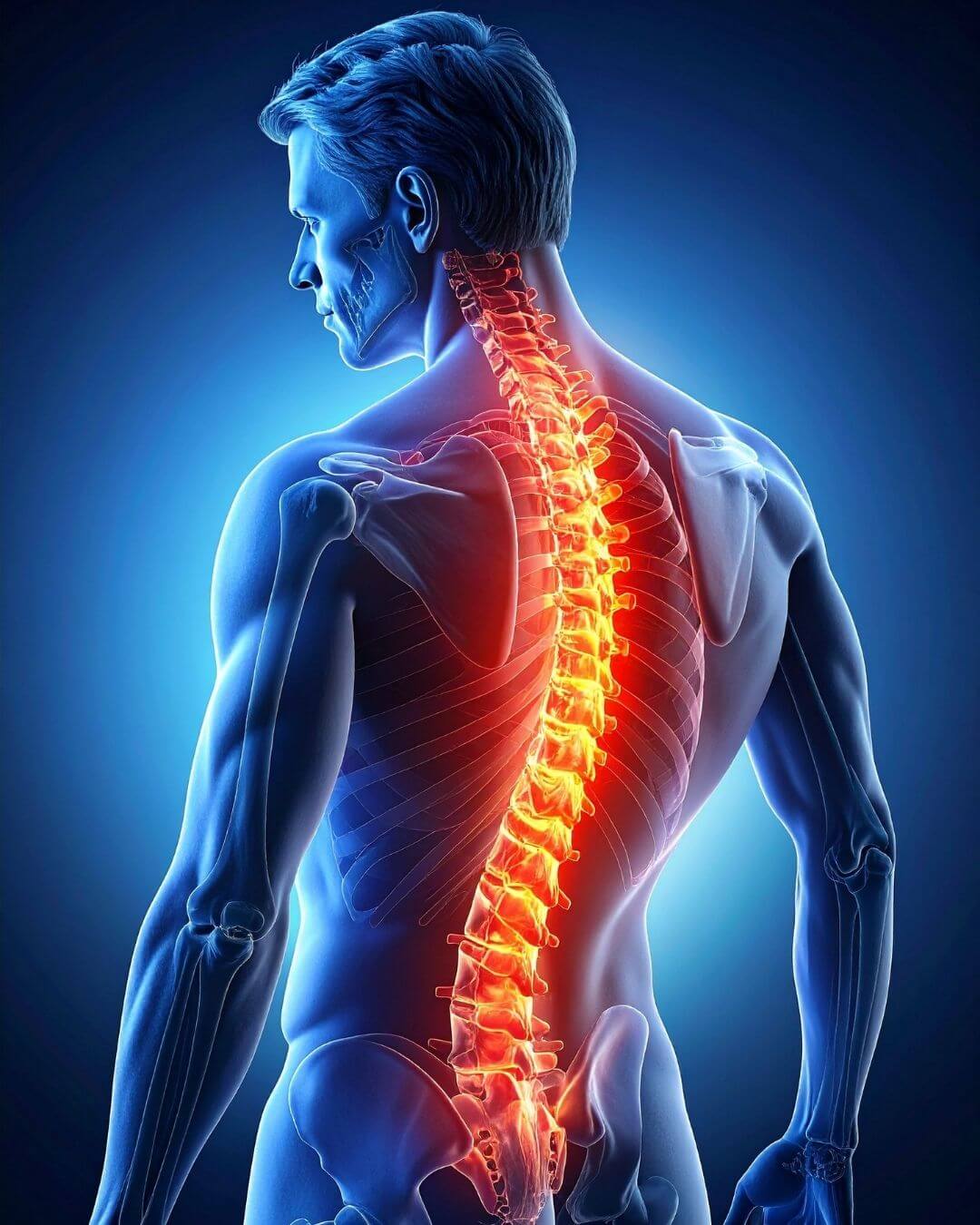
Recovery depends on symptom duration, nerve involvement, and whether treatment remains non-surgical or surgical.
During early recovery, the focus usually remains on:
pain control
safe walking
avoiding sudden bending
gradual return to sitting
After surgery, walking often starts early, while strengthening exercises begin gradually under supervision.
Patients recovering without surgery also benefit from guided exercises that improve core support and reduce repeat strain on the spine.

Many patients with slip disc arrive after weeks of pain, confusion about MRI findings, or uncertainty about whether surgery is truly needed.
Treatment becomes clearer when symptoms, nerve signs, and imaging are interpreted together rather than relying on MRI alone.
At Mangal Anand Hospital, treatment planning is guided by symptom severity, neurological findings, imaging correlation, and expected recovery pattern.
Patients benefit from:
spine surgeon evaluation
MRI-based treatment planning
minimally invasive surgery where suitable
rehabilitation support after treatment
structured follow-up during recovery
MBBS, MS, Fellowship in Spine Surgery
Consultant Spine Surgery
His work includes minimally invasive spine surgery, microscopic decompression, minimal access fusion for slip disc and stenosis, cervical disc replacement, vertebroplasty, spine tumour surgery, infection-related spine surgery, and deformity correction.
His advanced fellowship training includes AO Spine North America at the University of Toronto, spine fellowship in Ahmedabad, and further training in South Korea for endoscopic spine surgery and deformity correction.


M.B.B.S, D.N.B (Orthopedics), MIS Spine Fellowship
Consultant Spine Surgery
His practice focuses on minimally invasive spine surgery, decompression procedures, fusion surgery, cervical disc procedures, navigated spine surgery, and treatment of spinal fractures and nerve compression.
A large part of his work involves deciding which patients improve with conservative treatment and which patients benefit from timely surgery.
M.B.B.S, D.N.B. (Orthopedics), Fellowship Spine Surgery
Consultant Spine Surgery
His expertise includes microscopic decompression, minimally invasive fusion, cervical disc replacement, vertebroplasty, kyphoplasty, deformity correction, and interventional spine pain procedures.
His long clinical experience and fellowship exposure in the UK, Germany, USA, and India support treatment planning in both routine and complex spine conditions.

Recovery depends on the procedure performed, pre-operative nerve status, and overall fitness.
Early recovery usually focuses on:
Rehabilitation then helps restore:
Many patients also benefit from supervised physiotherapy during recovery.
Internationally recognized team of doctors with modern equipment & services

Get all your medical care under one roof with state-of-the-art facilities and equipment

Patient comfort and safety, with a clean and hygienic environment and 24/7 nursing care


No. Many slip disc cases improve with medicines, physiotherapy, and time if weakness is absent.
Mild cases may improve within a few weeks, while persistent nerve pain may take longer depending on disc pressure.
Yes, repeat symptoms can happen if disc strain continues or spinal support remains weak.
MRI is usually advised when symptoms persist, radiate into the leg or arm, or weakness appears.
Controlled walking is often helpful, but excessive strain or painful movement should be avoided early.