


Highly experienced doctors
Internationally recognized team of doctors with modern equipment & services

MBBS, MS, Fellowship in Spine Surgery
Consultant Spine Surgery
His work includes minimally invasive spine surgery, microscopic decompression, minimal access fusion for slip disc and stenosis, cervical disc replacement, vertebroplasty, spine tumour surgery, infection-related spine surgery, and deformity correction.
His advanced fellowship training includes AO Spine North America at the University of Toronto, spine fellowship in Ahmedabad, and further training in South Korea for endoscopic spine surgery and deformity correction.

M.B.B.S, D.N.B (Orthopedics), MIS Spine Fellowship
Consultant Spine Surgery
His practice focuses on minimally invasive spine surgery, decompression procedures, fusion surgery, cervical disc procedures, navigated spine surgery, and treatment of spinal fractures and nerve compression.
A large part of his work involves deciding which patients improve with conservative treatment and which patients benefit from timely surgery.

M.B.B.S, D.N.B. (Orthopedics), Fellowship Spine Surgery
Consultant Spine Surgery
His expertise includes microscopic decompression, minimally invasive fusion, cervical disc replacement, vertebroplasty, kyphoplasty, deformity correction, and interventional spine pain procedures.
His long clinical experience and fellowship exposure in the UK, Germany, USA, and India support treatment planning in both routine and complex spine conditions.

A spine surgeon is usually consulted when back pain, neck pain, leg pain, numbness, tingling, or weakness continues despite medicines, physiotherapy, or rest. Patients from Chembur, Ghatkopar, Sion, Navi Mumbai, and surrounding parts of Mumbai often seek spine surgeon consultation when pain starts affecting walking, sitting, sleep, work, or daily movement.
Not every spine problem needs surgery. In many cases, the first step is to identify whether symptoms are coming from disc pressure, spinal narrowing, instability, inflammation, or age-related degeneration. A spine surgeon helps determine whether treatment should remain non-surgical or whether nerve compression, deformity, or instability now needs surgical correction.
At Mangal Anand Hospital, spine evaluation is done for both common and complex spine conditions affecting the neck, upper back, lower back, and spinal nerves.
Back pain often improves with time, but certain symptoms suggest that specialist spine evaluation becomes important.
Consultation is usually advised when pain continues for several weeks, returns repeatedly, or begins limiting normal movement.
Spine surgeon assessment becomes important if symptoms include:
pain travelling from the lower back into the leg
numbness in the foot or hand
tingling that continues daily
weakness in one arm or one leg
difficulty standing for long periods
walking discomfort relieved by sitting
neck pain with arm heaviness
loss of grip strength
balance changes while walking
These symptoms often suggest nerve irritation, spinal narrowing, or instability that needs proper evaluation rather than repeated pain relief medicines alone.
In advanced situations, urgent review is needed if bladder control, bowel control, or walking ability starts changing.
Most patients do not consult a spine surgeon for ordinary back pain. Consultation usually happens when pain starts radiating into the leg or arm, when numbness returns repeatedly, when walking becomes uncomfortable, or when weakness begins affecting confidence in movement.
In many cases, patients have already tried medicines, rest, physiotherapy, or pain treatment before seeking specialist opinion.
At this stage, the main question is whether the problem is still reversible with conservative care or whether nerve pressure, instability, or structural change now needs focused spine treatment.
Spine specialist evaluation before surgery helps confirm whether symptoms, nerve findings, and imaging clearly match the level causing pain or weakness. A spine surgeon does more than confirm whether surgery is needed. Specialist evaluation helps identify whether symptoms are coming from disc compression, spinal narrowing, instability, deformity, fracture, infection, or early spinal cord involvement. In many patients, the main decision is not surgery versus no surgery, but which treatment can protect nerve function and prevent long-term worsening.This becomes especially important when MRI findings and symptoms do not fully match, when weakness begins appearing, or when more than one treatment option is possible.
A slip disc happens when disc material pushes outward and irritates or compresses a nearby nerve. This commonly affects the lower back, but it can also occur in the neck.
Patients often notice:
lower back pain
pain radiating into one leg
tingling in the foot
difficulty bending
pain while sitting or coughing
early nerve weakness in the leg
Many slip disc cases improve without surgery, but persistent nerve compression may require focused treatment or microdiscectomy if weakness or severe pain continues.
Spinal stenosis means narrowing of the spinal canal, which reduces space available for nerves. It commonly develops with age due to disc degeneration, ligament thickening, and joint enlargement.
Patients may notice:
pain while walking
heaviness in both legs
numbness after standing
relief after bending forward or sitting
As narrowing progresses, walking distance often reduces gradually.
Sciatica is pain caused by irritation of the sciatic nerve, usually due to slip disc or narrowing in the lower spine.
Pain may travel from:
lower back
buttock
thigh
calf
foot
Some patients also develop a burning sensation, tingling, or weakness.
Spondylolisthesis occurs when one vertebra slips forward over another, creating instability in the spine.
This may cause:
lower back pain
stiffness
nerve compression
leg pain during walking
difficulty standing upright
Treatment depends on the degree of slip and nerve involvement.
Neck-related spine disorders may involve disc prolapse, degeneration, or nerve compression in the cervical spine.
Symptoms often include:
neck pain
arm pain
tingling in fingers
reduced grip strength
shoulder heaviness
When spinal cord pressure develops, balance and hand coordination may also be affected.
With age, spinal discs gradually lose water content and elasticity. This reduces shock absorption and may lead to chronic pain, stiffness, or disc collapse.Some patients experience mild symptoms while others develop instability or nerve pressure.
Spine surgeon evaluation is also important in fractures, spinal tumours, vertebral collapse, and spinal infections including tuberculosis.These conditions may present with persistent pain, weakness, deformity, or difficulty standing.Early diagnosis helps prevent long-term nerve damage and spinal instability.
Spinal infection may involve the vertebral bone, disc space, or surrounding tissues.
Patients may present with:
persistent back pain
fever
weakness
weight loss
difficulty standing
Spinal tuberculosis remains an important cause of prolonged back pain in some patients and may need both medicines and surgery, depending on severity.
Scoliosis causes sideways spinal curvature and may appear during adolescence or adulthood.
Some patients notice:
uneven shoulders
visible spinal curve
waist asymmetry
fatigue during standing
Treatment depends on age, progression, and severity.
Depending on symptoms, MRI findings, nerve pressure, and spinal stability, treatment planning may include microscopic decompression, minimally invasive fusion, cervical disc replacement, vertebroplasty, kyphoplasty, deformity correction, tumour surgery, or revision procedures after previous spine surgery.Not every patient needs surgery, but understanding possible treatment options helps define whether care should remain conservative or move toward intervention.
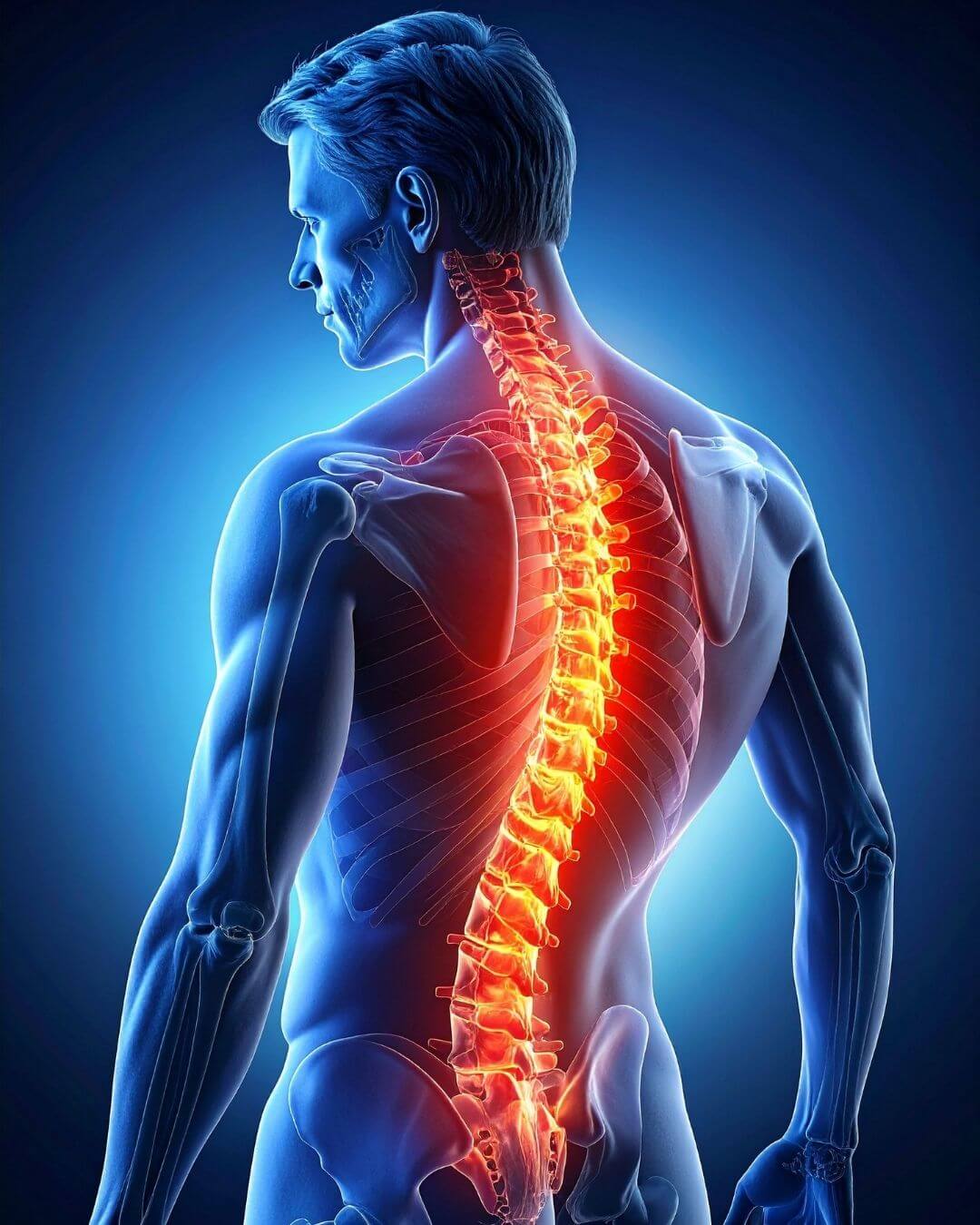
Many patients improve without surgery when treatment begins early.
Non-surgical treatment may include:
medicines
physiotherapy
posture correction
guided exercises
activity modification
spinal injections in selected cases
This is often effective in early disc disease, mild stenosis, mechanical back pain, and some cervical conditions.A spine surgeon helps decide how long conservative treatment should continue before surgery is considered.

Microdiscectomy removes the disc fragment pressing on a nerve through a focused surgical approach.It is commonly performed for slip disc with persistent leg pain or weakness.
Decompression surgery enlarges space around nerves when spinal stenosis causes leg heaviness, numbness, or reduced walking tolerance.
Fusion stabilises unstable spinal segments using implants and bone support.It is commonly advised in:
listhesis
recurrent disc disease
instability
deformity correction
Certain neck conditions require decompression or disc replacement when arm weakness, spinal cord pressure, or severe nerve symptoms continue.
These procedures help stabilise selected vertebral compression fractures, especially in osteoporosis-related vertebral collapse.
Microdiscectomy removes the disc fragment pressing on a nerve through a focused surgical approach.It is commonly performed for slip disc with persistent leg pain or weakness.
Decompression surgery enlarges space around nerves when spinal stenosis causes leg heaviness, numbness, or reduced walking tolerance.
Fusion stabilises unstable spinal segments using implants and bone support.It is commonly advised in:
listhesis
recurrent disc disease
instability
deformity correction
Certain neck conditions require decompression or disc replacement when arm weakness, spinal cord pressure, or severe nerve symptoms continue.
These procedures help stabilise selected vertebral compression fractures, especially in osteoporosis-related vertebral collapse.
Minimally invasive spine surgery uses smaller surgical access with magnification and specialised instruments to reduce tissue disruption.Possible advantages include:
smaller incision
less blood loss
reduced muscle injury
earlier walking
shorter hospital stay
Not every patient is suitable for minimally invasive surgery. The choice depends on spinal anatomy, severity of disease, and spinal stability.
Spine treatment often needs more than one specialist opinion, especially when symptoms are complex or imaging findings do not fully match symptoms.
With three spine surgeons managing different types of spinal disorders, treatment planning becomes more balanced and condition-specific.
Patients also benefit from:
Many spine problems improve without surgery when treated early.
Non-surgical treatment may include:
The aim is to reduce inflammation, improve muscle support, and control symptoms before considering surgery.
Recovery depends on the procedure performed, pre-operative nerve status, and overall fitness.
Early recovery usually focuses on:
Rehabilitation then helps restore:
Many patients also benefit from supervised physiotherapy during recovery.
Internationally recognized team of doctors with modern equipment & services

Get all your medical care under one roof with state-of-the-art facilities and equipment

Patient comfort and safety, with a clean and hygienic environment and 24/7 nursing care


No. Many slip disc cases improve with medicines, physiotherapy, and time. Surgery is considered when pain remains severe or weakness develops.
Mild to moderate spinal stenosis often improves with exercises, medicines, and activity adjustment. Surgery is considered when walking becomes limited.
Yes. Clinical examination usually comes first. MRI is advised when symptoms suggest disc pressure, nerve involvement, instability, or persistent pain needing further evaluation.
Urgent surgery may be needed if weakness increases, walking becomes difficult, or bladder symptoms appear.
No. Some cases are suitable, while others need wider exposure depending on spinal stability and complexity.