Icon
Open 24 hours, 7 days a week
Icon
48 Swastik Park, Chembur, Mumbai - 400071
Mangal Anand Hospital

Knee Arthroscopy Surgery in Chembur Mumbai

Minimally invasive knee arthroscopy for meniscus tears, ligament injuries, cartilage damage, and persistent knee pain.

Advanced Treatment for Knee Injuries

Knee arthroscopy is a minimally invasive surgical procedure used to diagnose and treat problems inside the knee joint through very small incisions. It allows orthopaedic surgeons to examine the structures within the knee using a thin camera called an arthroscope and perform treatment with specialised instruments without opening the joint completely.This technique is widely used for knee injuries because it causes less tissue damage than traditional open surgery. Smaller incisions usually mean less postoperative pain, reduced swelling, and a faster return to normal activities.At Mangal Anand Hospital in Chembur, knee arthroscopy is commonly advised for patients with ligament injuries, meniscus tears, cartilage damage, and knee pain that does not improve with medication, rest, or physiotherapy.

When Knee Arthroscopy is Recommended

Knee arthroscopy is recommended when a patient continues to have pain, swelling, or restricted knee movement despite non-surgical treatment. In many cases, imaging tests such as MRI help identify the injury, but arthroscopy allows direct visualisation of the joint and treatment during the same procedure.It is often advised for sports injuries, twisting injuries, cartilage problems, and conditions causing repeated knee locking or instability.

Symptoms That May Need Knee Arthroscopy

A patient may require knee arthroscopy if symptoms continue to interfere with daily movement or physical activity.

Common symptoms include:

  • Persistent knee pain

  • Swelling around the knee joint

  • Locking or catching sensation in the knee

  • Clicking sounds during movement

  • Difficulty bending or straightening the knee

  • Knee instability while walking

  • Recurrent giving way of the knee

These symptoms often indicate injury to the meniscus, ligaments, or cartilage inside the knee.

Conditions Treated with Knee Arthroscopy

Knee arthroscopy is used to treat several conditions affecting the internal structures of the knee joint.

Meniscus Tear Treatment
A meniscus tear is one of the most common reasons for knee arthroscopy. The meniscus acts as a cushion between the thigh bone and shin bone. Arthroscopy helps repair or trim torn meniscus tissue while preserving healthy joint function.

ACL Injury Treatment
Anterior cruciate ligament injuries are common in sports and sudden twisting movements. Arthroscopic ACL reconstruction helps restore knee stability and improve confidence during walking and sports activities.

Cartilage Damage Treatment
Cartilage injury can lead to pain, swelling, and reduced movement. Arthroscopy allows removal of loose cartilage fragments or smoothing of damaged surfaces inside the knee.

Patellar Instability
When the kneecap repeatedly shifts out of place, arthroscopy helps assess associated damage and treat contributing internal problems.

Synovitis and Loose Fragments
Inflammation inside the knee joint or loose bone and cartilage fragments may cause pain, swelling, and locking. Arthroscopy allows safe removal of damaged tissue.

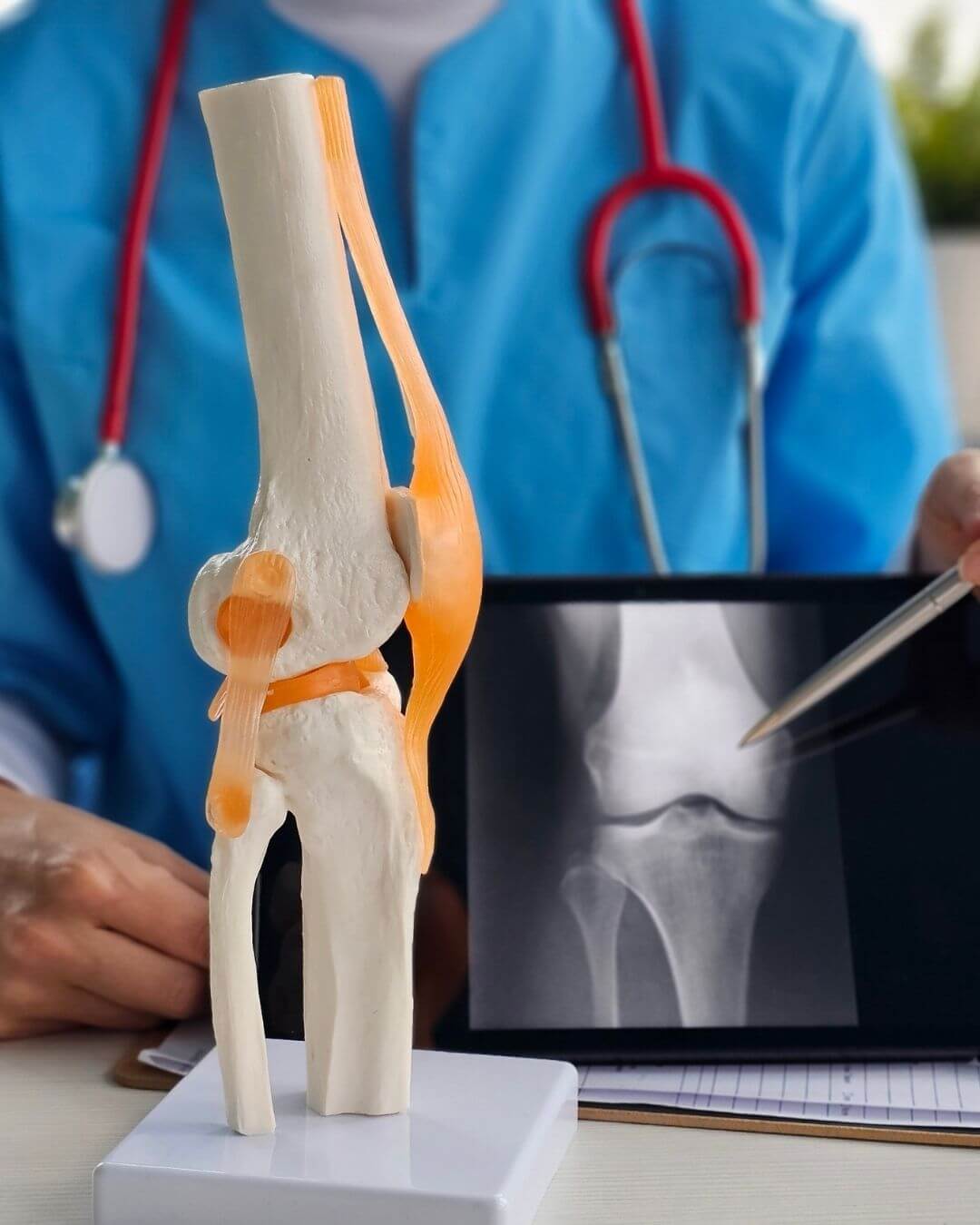
Understanding the Knee Joint and Common Injuries

The knee is one of the most active joints in the body and is frequently affected by injury, especially during sports, climbing stairs, sudden twisting movements, or falls.The joint depends on cartilage, meniscus, and ligaments working together to maintain smooth movement and stability.

Meniscus, Ligaments and Cartilage in the Knee

The meniscus acts as a shock absorber inside the knee. There are two menisci in each knee that help distribute weight and reduce stress during movement.Ligaments provide stability:

ACL

PCL

MCL

LCL

Cartilage covers the ends of bones and helps the joint move smoothly without friction.Damage to any of these structures can affect knee function significantly.

How Knee Injuries Affect Joint Movement

When the meniscus tears or ligaments become unstable, the knee may lose smooth movement. Patients often experience locking, pain while climbing stairs, difficulty squatting, or sudden instability.Untreated internal knee injuries may lead to repeated swelling and gradual joint degeneration.

What Happens During Knee Arthroscopy

Knee arthroscopy is usually performed in an operating room under sterile conditions. Most procedures are completed as day care surgery.

Preparation for Knee Arthroscopy Surgery

Before surgery, the doctor reviews medical history, medications, and imaging reports. Patients may be advised to stop blood-thinning medicines before surgery.Fasting is usually required depending on the type of anaesthesia planned.

Step-by-Step Knee Arthroscopy Procedure

The procedure generally follows these steps:

  1. Small incisions are made around the knee joint.

  2. The arthroscope is inserted through one incision.

  3. Sterile fluid is introduced into the knee for clear visibility.

  4. Images from the camera appear on a monitor.

  5. Small instruments are inserted through additional incisions.

  6. Torn meniscus, damaged cartilage, or ligament injuries are treated.

  7. The incisions are closed with stitches or adhesive strips.

The procedure usually takes about one hour, depending on the complexity of the injury.

Anaesthesia Used During Surgery

Knee arthroscopy may be performed under:

  • Regional anaesthesia

  • Spinal anaesthesia

  • General anaesthesia

The choice depends on the procedure and the patient's condition.

Expert Insights on Knee Arthroscopy

Common Knee Problems Treated Arthroscopically

Meniscus Tear Surgery

Arthroscopy allows accurate treatment of meniscus tears through small incisions. Depending on the type of tear, the surgeon may repair or remove damaged tissue.

ACL Reconstruction

ACL reconstruction is performed arthroscopically using graft tissue to restore knee stability. This is commonly advised for active patients and sports injuries.

Cartilage Repair and Loose Body Removal

Loose cartilage fragments and damaged joint surfaces can be treated arthroscopically to reduce pain and improve movement.

Arthroscopy Specialists at Mangal Anand Hospital

Dr. Nikhil Gokhal
M.B.B.S, M.S (Orthopedics), FRCS (Trauma & Ortho, UK)
Expertise: Shoulder & Knee surgery, shoulder conditions, Rotator cuff tears, shoulder instability, frozen shoulder, calcific tendonitis, shoulder arthritis- shoulder replacement, AC joint problem, sports injury, revision TKR, knee cap instability
Dr. Pradip Nemade
M.B.B.S, M.S (Orthopedics)
Expertise: Arthroscopy, Arthroplasty, pelviacetabular and complex trauma, arthroplastic ACL/PCL, Meniscus surgery, shoulder surgery, fracture fixation, Sports Injury, Ligament & Meniscus surgery, Cartilage injury, Rotator cuff tear, Labral Tear, Knee/hip arthritis, dislocation
Dr. Sanjay Singh
M.B.B.S, M.S (Orthopedics), Fellowship in Shoulder & elbow surgery (Italy)
Expertise: Shoulder & Elbow surgery, Frozen shoulder, pain in shoulder, knee pain, arthritis and ankylosing spondylitis, arthroscopic ACL surgery, arthroscopic Meniscus surgery, arthroscopic knee ligament surgery, shoulder arthroscopy, arthroscopic shoulder dislocation surgery.

Who May Benefit from Knee Arthroscopy

Knee arthroscopy may benefit patients who have:

  • Persistent knee pain despite physiotherapy

  • Sports injuries

  • Repeated swelling after activity

  • Meniscus tears confirmed on MRI

  • Ligament instability

  • Mechanical symptoms such as locking or clicking

It is usually advised when conservative treatment has not provided sufficient relief.

Benefits of Knee Arthroscopy

Knee arthroscopy offers several advantages compared with traditional open surgery.Smaller incisions

Less tissue trauma

Reduced pain after surgery

Lower risk of infection

Faster recovery

Shorter hospital stay

Early rehabilitation

These benefits make it a preferred treatment option for many knee injuries.

Risks and Possible Complications

Knee arthroscopy is considered safe, but like any surgical procedure, certain complications may occur.
Infection and BleedingInfection around the incision or inside the joint is uncommon but possible.
Blood Clots and Knee StiffnessA small number of patients may develop blood clots or temporary stiffness after surgery.
Swelling After SurgeryMild swelling is common during early recovery and usually improves with rest and ice application.

Recovery After Knee Arthroscopy

Recovery depends on the condition treated and the type of procedure performed.

Walking After Knee ArthroscopyMany patients begin walking with support within a short period after surgery. Some may require crutches temporarily.
Physiotherapy and Knee StrengtheningPhysiotherapy is important after knee arthroscopy. Exercises help improve movement, strength, and stability.
Knee Arthroscopy Recovery TimeMany patients return to normal daily activities within a few weeks. Recovery after meniscus repair or ACL reconstruction may take longer, depending on rehabilitation progress.

When to Contact Your Doctor After Surgery

Contact your doctor if you experience:

  • Fever
  • Increasing pain
  • Excessive swelling
  • Calf pain
  • Excessive swelling
  • Discharge from the wound
  • Redness around the incision
Why Choose Us

Complete Healthcare Solution for our valuable Patients

Choose Icon

Highly experienced doctors

Internationally recognized team of doctors with modern equipment & services

Choose Icon

Wide range of services

Get all your medical care under one roof with state-of-the-art facilities and equipment

Choose Icon

Personalized patient-centered approach

Patient comfort and safety, with a clean and hygienic environment and 24/7 nursing care

Check Image
40 years of Experience
Choose Thumbnail
Choose Design Image

Frequently Asked Questions About Knee Arthroscopy

Is knee arthroscopy painful?

The procedure itself is performed under anaesthesia. Mild pain after surgery is common and is managed with medication.

How long does knee arthroscopy take?

Most procedures take about 45 minutes to one hour.

Can I walk after a knee arthroscopy?

Walking usually begins early, with support depending on the procedure performed.

Is meniscus repair better than removal?

Whenever possible, repairing the meniscus is preferred because it preserves knee cushioning and long-term joint health.