


Highly experienced doctors
Internationally recognized team of doctors with modern equipment & services

Spinal stenosis usually develops gradually. Many patients first notice that walking becomes uncomfortable after a certain distance, standing for longer periods becomes difficult, or both legs begin feeling heavy after a few minutes of movement.This happens because the space available for nerves inside the spine becomes reduced, especially in the lower back. As pressure increases around the nerves, patients often begin stopping repeatedly while walking, leaning forward for relief, or sitting down more often than before.Patients from Chembur, Ghatkopar, Sion, Navi Mumbai, and surrounding parts of Mumbai often seek spine evaluation when these symptoms begin affecting daily routine, outdoor walking, travel, or confidence in movement.
A common feature of spinal stenosis is that symptoms temporarily improve when a person sits down, bends forward, or leans on support while walking.
This happens because forward bending slightly increases available space inside the spinal canal and reduces nerve pressure.
Patients often describe:
relief after sitting for a few minutes
easier walking when leaning forward
discomfort returning during straight standing
repeated need to stop after walking short distances
This walking pattern is often seen in lumbar spinal stenosis and may suggest developing nerve compression.
Spinal stenosis usually develops because of gradual age-related changes inside the spine.
In spinal stenosis, spinal canal narrowing gradually reduces the space available for nerves inside the backbone.
Common causes include:
disc bulging into the spinal canal
thickening of supporting ligaments
enlargement of spinal joints
bone overgrowth near the canal
gradual loss of disc height
vertebral slipping in some patients
These changes slowly reduce the space available for spinal nerves.
In some patients, narrowing develops faster when instability, previous injury, arthritis, or long-standing degeneration is present.
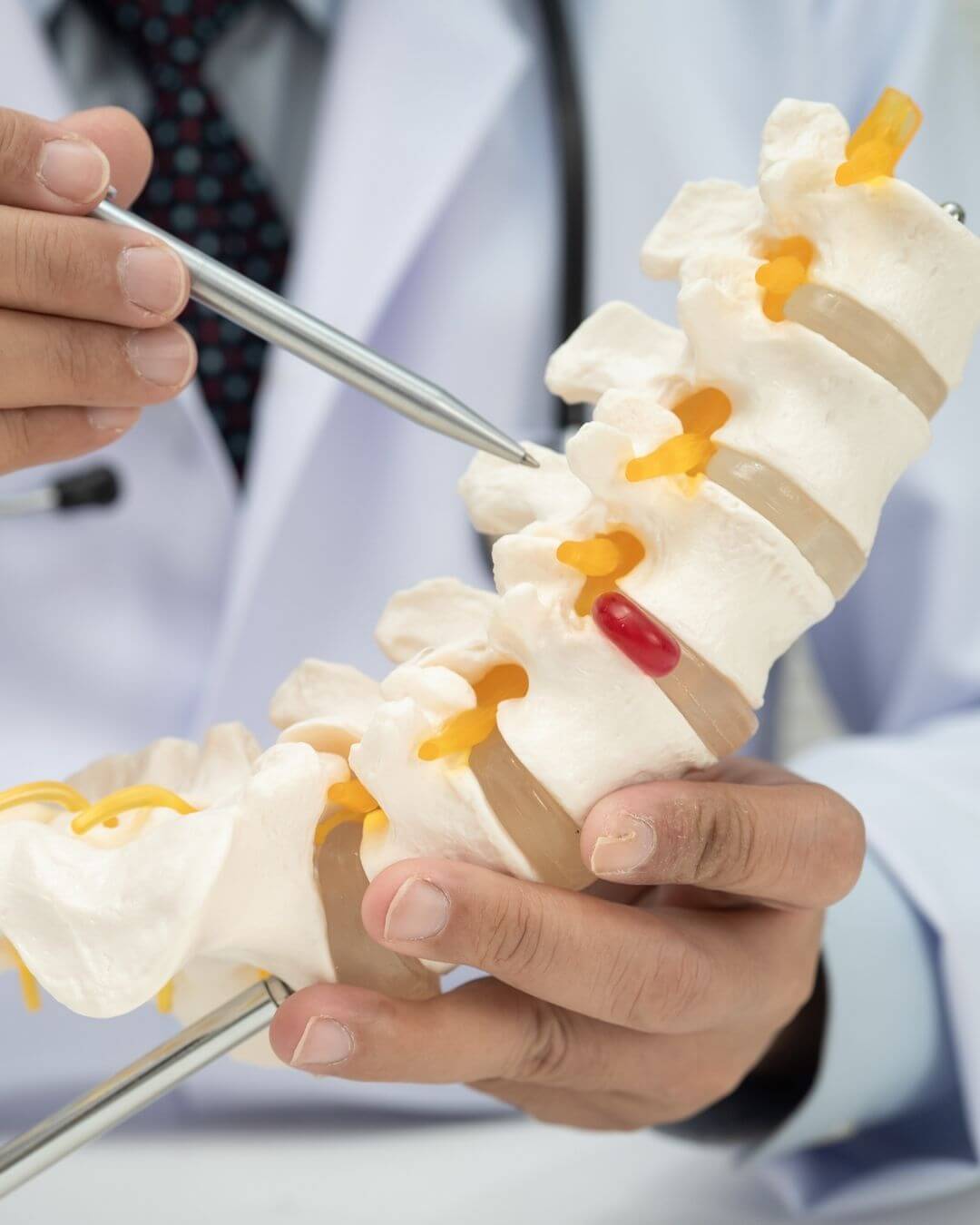
Lumbar spinal stenosis affects the lower back and is the most common type.
Symptoms often include:
Some patients also develop neurogenic claudication, where walking capacity gradually reduces because nerves become compressed during upright posture.
Cervical spinal stenosis affects the neck and can involve pressure on both nerve roots and the spinal cord.
Common cervical spinal stenosis symptoms include hand numbness, grip weakness, imbalance while walking, and arm heaviness.
Patients may also notice:
If spinal cord pressure increases, hand clumsiness and balance difficulty may gradually become more noticeable.
Spinal stenosis often begins slowly, so many patients assume the problem is ordinary age-related back pain.
Because symptoms usually fluctuate in the early stage, patients often continue with medicines, home remedies, or rest for long periods before proper evaluation.
The difference becomes clearer when:
At this stage, proper spine assessment becomes important to identify whether nerve pressure is progressing.
Diagnosis begins with clinical examination and symptom pattern analysis.
A spine surgeon usually evaluates:
Investigations may include:
MRI helps determine whether narrowing is mild, moderate, or severe. MRI also helps identify whether narrowing is affecting one level or multiple levels.
Many patients improve without surgery when symptoms are mild to moderate and nerve function remains stable.
Treatment may include:
Selected patients may also benefit from spinal injections when pain remains persistent despite medicines.
Non-surgical treatment is often effective when walking remains manageable and weakness is absent.
Surgery is considered when symptoms continue progressing despite proper conservative treatment.
Spinal stenosis surgery is considered only when nerve compression clearly explains persistent symptoms and walking ability continues declining.
It is usually advised when:
The decision depends on symptoms, examination findings, imaging correlation, and effect on daily life.
MRI alone does not decide surgery.
The exact procedure depends on the number of narrowed levels, spinal stability, and nerve findings.
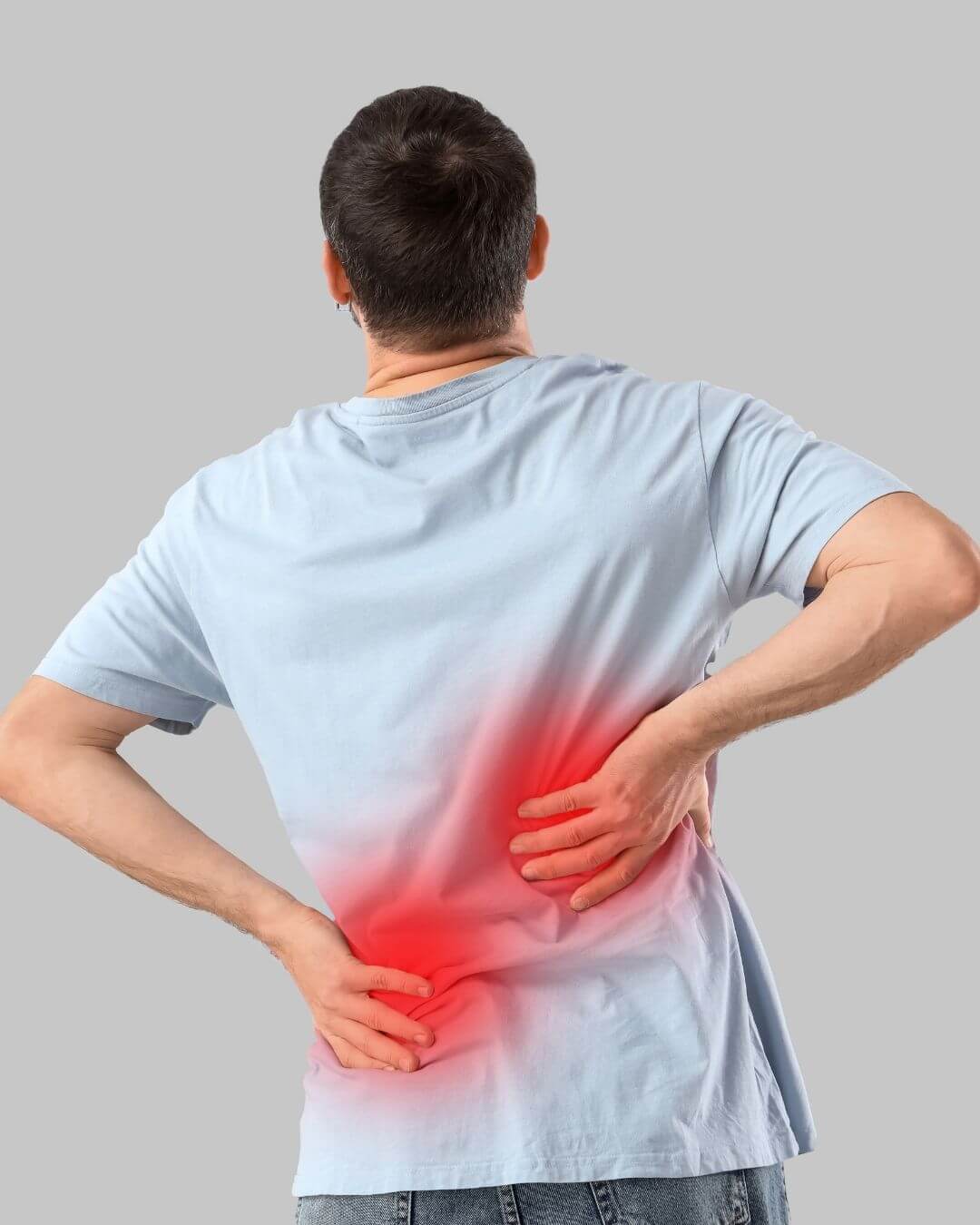
Recovery depends on the severity of nerve compression, the procedure performed, and overall physical condition.
Early recovery usually focuses on:
safe walking
pain control
posture guidance
Later recovery includes:
muscle strengthening
flexibility improvement
gradual increase in activity
Supervised rehabilitation often improves long-term mobility.
Spinal stenosis treatment often needs careful correlation between symptoms, walking limitation, neurological findings, and MRI changes. Because many patients show gradual progression over time, treatment decisions must balance symptom severity, nerve function, and whether surgery is truly necessary.
At Mangal Anand Hospital, spinal stenosis evaluation is supported by three experienced spine surgeons managing both lumbar and cervical narrowing, including cases involving leg heaviness, reduced walking distance, hand weakness, and spinal instability.
Patients often choose Mangal Anand Hospital because treatment planning includes:
This helps ensure that treatment remains matched to both MRI findings and day-to-day functional limitation.
MBBS, MS, Fellowship in Spine Surgery
Consultant Spine Surgery
His work includes minimally invasive spine surgery, microscopic decompression, minimal access fusion for slip disc and stenosis, cervical disc replacement, vertebroplasty, spine tumour surgery, infection-related spine surgery, and deformity correction.
His advanced fellowship training includes AO Spine North America at the University of Toronto, spine fellowship in Ahmedabad, and further training in South Korea for endoscopic spine surgery and deformity correction.


M.B.B.S, D.N.B (Orthopedics), MIS Spine Fellowship
Consultant Spine Surgery
His practice focuses on minimally invasive spine surgery, decompression procedures, fusion surgery, cervical disc procedures, navigated spine surgery, and treatment of spinal fractures and nerve compression.
A large part of his work involves deciding which patients improve with conservative treatment and which patients benefit from timely surgery.
M.B.B.S, D.N.B. (Orthopedics), Fellowship Spine Surgery
Consultant Spine Surgery
His expertise includes microscopic decompression, minimally invasive fusion, cervical disc replacement, vertebroplasty, kyphoplasty, deformity correction, and interventional spine pain procedures.
His long clinical experience and fellowship exposure in the UK, Germany, USA, and India support treatment planning in both routine and complex spine conditions.

Recovery after spinal stenosis surgery depends on how long nerves were compressed before treatment, the number of levels treated, and whether decompression alone or fusion was required.
Many patients begin standing and walking early after surgery, but improvement in leg heaviness, numbness, or walking distance may continue gradually over the following weeks.
Early recovery usually focuses on:
Further recovery often includes:
When nerve compression has been present for a long time, numbness or weakness may improve more slowly than pain.
Internationally recognized team of doctors with modern equipment & services

Get all your medical care under one roof with state-of-the-art facilities and equipment

Patient comfort and safety, with a clean and hygienic environment and 24/7 nursing care


Can spinal stenosis improve without surgery?
Yes. Mild and moderate spinal stenosis often improves with medicines, physiotherapy, and activity adjustment.
Why does spinal stenosis cause walking difficulty?
Walking increases nerve demand while upright posture reduces available canal space, which can trigger leg heaviness or numbness.
Is lumbar spinal stenosis serious?
It can become serious if walking distance continues reducing, weakness develops, or numbness progresses.
When is surgery advised for spinal stenosis?
Surgery is advised when symptoms persist despite treatment and nerve compression begins affecting daily movement.
Can spinal stenosis become serious if untreated?
If symptoms continue progressing, untreated stenosis may lead to increasing nerve weakness, reduced mobility, and worsening balance.