


A hip fracture is one of the most serious orthopaedic injuries in older adults. It occurs when the upper part of the thigh bone (femur) breaks near the hip joint, making it difficult or impossible to stand, walk, or bear weight on the affected leg. While many hip fractures happen after a simple fall in elderly individuals with osteoporosis, younger people can also sustain these injuries following road traffic accidents, sports injuries, or other high-impact trauma.
Unlike many other fractures, a hip fracture is often considered a medical emergency. Delayed treatment can increase the risk of complications such as blood clots, pneumonia, pressure sores, muscle loss, and prolonged immobility. Early diagnosis and timely surgical intervention, when appropriate, play an important role in relieving pain, restoring mobility, and improving recovery.
At Mangal Anand Hospital Chembur, Mumbai, hip fracture treatment is tailored to the individual rather than following a one-size-fits-all approach. The choice of treatment depends on several factors, including the type and location of the fracture, the patient's age, bone quality, overall health, activity level, and pre-injury mobility. Depending on these factors, treatment may involve internal fixation using specialised implants or hip replacement surgery, followed by structured rehabilitation to help patients regain independence.
This guide explains everything you need to know about hip fractures, from understanding how the hip works and recognising the symptoms to diagnosis, treatment options, recovery, and long-term prevention. Whether you are seeking information for yourself or a loved one, the goal is to help you make informed decisions with confidence.
A hip fracture is a break in the upper part of the femur (thigh bone) close to the hip joint. Most fractures occur in the femoral neck or the area between the greater and lesser trochanters (intertrochanteric region).
Yes. Most hip fractures require urgent medical evaluation. Early treatment within 24 to 48 hours helps reduce complications and improves the chances of a successful recovery.
A small number of stable or incomplete fractures may be managed without surgery. However, most hip fractures require surgical treatment because the broken bone is unlikely to heal adequately without stabilisation.
Older adults, particularly those with osteoporosis, are at the greatest risk. Other risk factors include poor balance, previous falls, certain medical conditions, and medications that affect bone strength or increase the likelihood of falling.
Recovery varies depending on the type of fracture, treatment received, and the patient's overall health. Most patients begin walking with assistance within a few days after surgery, while complete recovery may take several months.

A hip fracture is a break in the upper part of the femur near the hip joint. Although the term "hip fracture" is commonly used, the injury almost always affects the upper thigh bone rather than the pelvic socket.
These fractures range from small cracks in the bone to complete breaks where the bone fragments become displaced. The severity of the injury depends on the location of the fracture, the amount of displacement, the quality of the bone, and the force responsible for the injury.
Hip fractures are particularly common among older adults because ageing causes bones to become thinner and weaker over time. Osteoporosis further reduces bone strength, making even a simple fall from standing height capable of causing a fracture.In younger adults, stronger bones generally require much greater force before they break. As a result, hip fractures in this age group are more commonly associated with road traffic accidents, falls from a height, sports injuries, or other high-energy trauma.
Because the hip bears the body's weight during standing and walking, a fracture usually makes it impossible to walk normally. Patients often experience severe pain, and many are unable to stand or move the affected leg.
Without timely treatment, prolonged immobility can lead to serious medical complications, particularly in older adults. For this reason, hip fractures should never be dismissed as a routine broken bone.
they can make informed decisions regarding their care.
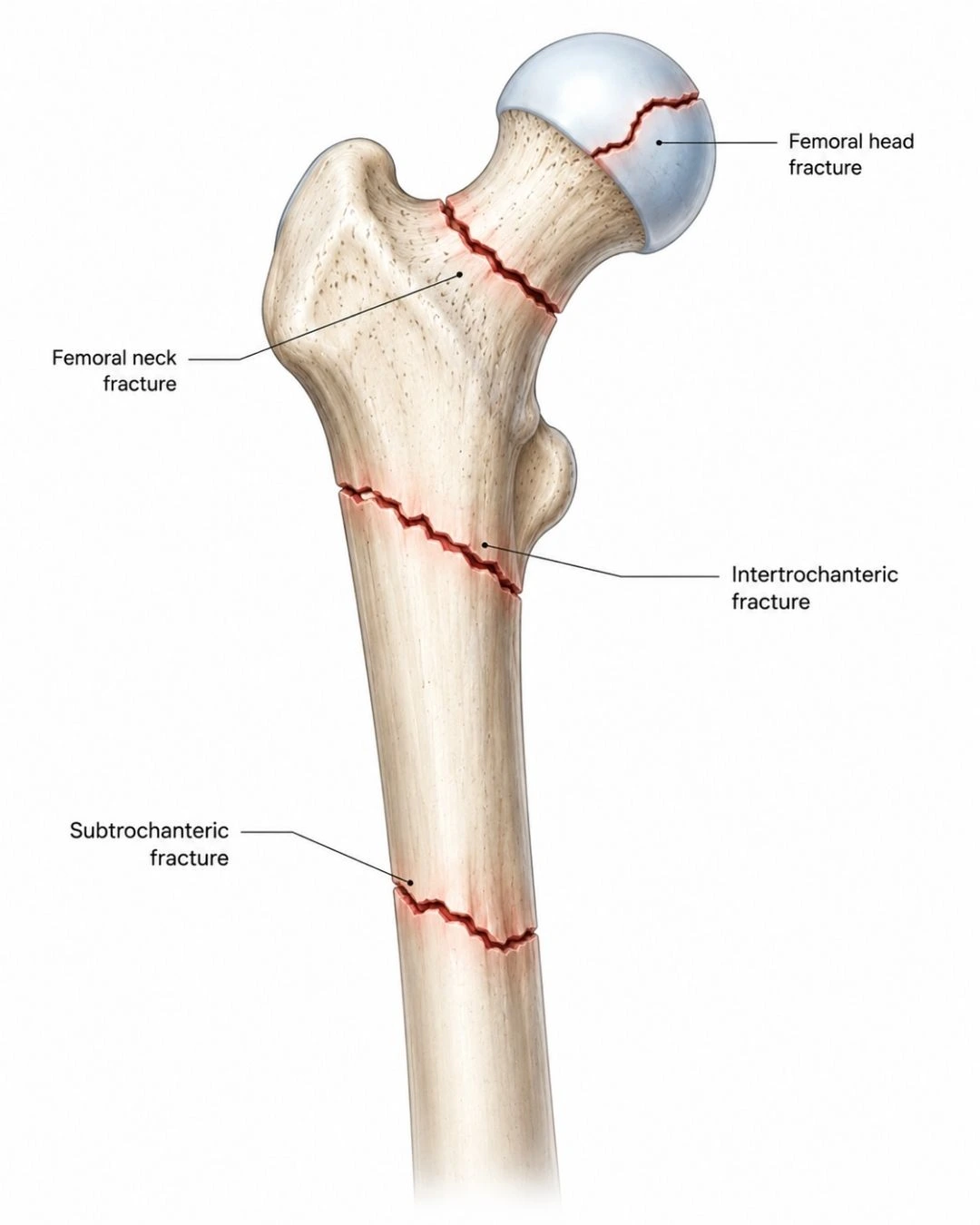
Not all hip fractures are the same. The exact location of the break influences the blood supply to the bone, the stability of the fracture, the choice of surgery, and the expected recovery.
The femoral neck is the narrow bridge of bone connecting the femoral head to the rest of the femur.
Fractures in this region are particularly important because they may interrupt the blood vessels supplying the femoral head. When blood supply is significantly affected, the bone may fail to heal properly or develop avascular necrosis.Depending on the patient's age, activity level, bone quality, and fracture pattern, treatment may involve internal fixation or hip replacement surgery.
Intertrochanteric fractures occur between the greater and lesser trochanters.
These fractures usually preserve the blood supply to the femoral head and often heal well when stabilised using appropriate fixation devices.They are especially common in older adults following low-energy falls.
Subtrochanteric fractures occur just below the lesser trochanter in the upper shaft of the femur.
The forces acting across this region make these fractures mechanically challenging, often requiring specialised fixation techniques and careful rehabilitation.
Fractures involving the femoral head are relatively uncommon and usually occur after high-energy trauma such as road traffic accidents. They may be associated with hip dislocations and require specialised orthopaedic management.
Hip replacement surgery at Mangal Anand Hospital is performed by an experienced team of orthopaedic surgeons with expertise in joint replacement, complex trauma, sports injuries, and reconstructive surgery.
Dr. Milind Sawant is the primary consultant for hip replacement surgery at Mangal Anand Hospital. With orthopaedic training in both India and the United Kingdom, he brings extensive experience in joint replacement and reconstructive orthopaedic surgery.
His qualifications include FRCS (Orthopaedics), FRCS (Edinburgh), FRCS (Glasgow), DNB Orthopaedics, FCPS, MS Orthopaedics and D.Orth. He has completed advanced fellowships in Knee & Sports Medicine in England, Knee Surgery in Australia, and Revision Knee Replacement in Germany and the USA.
In addition to clinical practice, Dr. Sawant has served as faculty for programmes that train orthopaedic surgeons in arthroscopy, knee replacement and fracture management. He has authored numerous peer-reviewed publications and presented research at national and international orthopaedic meetings.

Dr. Nikhil Gokhale completed his orthopaedic training at KEM Hospital before pursuing advanced fellowship training in the United Kingdom. His qualifications include FRCS (Trauma & Orthopaedics), MRCS (Edinburgh), and specialised fellowship training in joint replacement and shoulder surgery.
His expertise includes hip replacement, knee replacement, shoulder replacement, arthroscopy, and sports injury management. As part of the orthopaedic team at Mangal Anand Hospital, Dr. Gokhale contributes to the comprehensive assessment and management of patients requiring joint replacement surgery.

Dr. Pradip Nemade holds an MBBS, MS (Orthopaedics), and DNB (Orthopaedics). His clinical practice includes joint replacement surgery, complex trauma, pelvis and acetabular injuries, shoulder disorders, hip conditions, and sports injuries.
With extensive experience in managing both elective and trauma-related orthopaedic conditions, Dr. Nemade plays an important role in the multidisciplinary joint replacement team. His approach combines careful clinical evaluation with treatment plans tailored to each patient's functional needs and long-term recovery goals

A hip fracture can occur when the force applied to the upper part of the thigh bone exceeds the strength of the bone. In younger individuals with healthy bones, this usually requires significant trauma such as a road traffic accident or a fall from height. In contrast, older adults with osteoporosis may sustain the same injury after a simple slip while walking or a fall from standing height.
The majority of hip fractures occur in older adults after a low-energy fall. These incidents may appear minor but can result in significant injury because ageing and osteoporosis reduce bone strength.
Common situations include:
For many older adults, a hip fracture is often the first indication that their bones have become fragile due to osteoporosis.
In younger adults, hip fractures are far less common because healthy bone is much stronger. These injuries usually occur after high-impact trauma, such as:
These fractures are often more complex and may occur alongside injuries to the pelvis, spine, chest, or other limbs. Managing such cases requires careful assessment and a comprehensive treatment plan.
A stress fracture is a small crack in the bone caused by repetitive loading over time. It is more commonly seen in athletes, military personnel, long-distance runners, and individuals who suddenly increase their physical activity. People with osteoporosis or metabolic bone disorders are also at increased risk. Symptoms usually develop gradually, beginning as discomfort in the groin or hip during activity and progressing to pain even while walking or standing. Because X-rays may appear normal in the early stages, an MRI is often required to confirm the diagnosis.
In some patients, the bone breaks because it has been weakened by an underlying disease rather than trauma alone. Conditions that can weaken bone include:
These fractures require treatment of both the fracture and the underlying condition to achieve the best possible outcome.
Although anyone can sustain a hip fracture, certain individuals are significantly more likely to experience one than others.
Osteoporosis is the single most important risk factor for hip fractures. It is a condition in which bones gradually lose density and strength, becoming more fragile over time. As the bone weakens, even a simple fall from standing height may result in a fracture. Because osteoporosis often develops without symptoms, many people are unaware they have the condition until they sustain a fracture.
Bone density naturally decreases with age. At the same time, muscle strength, balance, reaction time, and vision may also decline, increasing the likelihood of falls. Most hip fractures occur in adults over the age of 65.
Women are more likely than men to develop osteoporosis after menopause due to declining oestrogen levels. This increases the risk of fragility fractures, including fractures of the hip.
A history of falling is one of the strongest predictors of future falls. Patients who have already experienced one fall often have underlying balance problems, muscle weakness, poor vision, or neurological conditions that increase the likelihood of another injury.
Several medical conditions can increase fracture risk by affecting bone strength, mobility, or balance.
These include:
Some medicines increase the risk of falls by causing dizziness, drowsiness, or low blood pressure. Others weaken bone when taken over long periods.
Examples include:
Patients should never stop prescribed medicines without consulting their doctor, but regular medication reviews can help identify potentially avoidable risks.
Everyday habits also influence bone health. Factors associated with a higher risk of hip fracture include:

Most patients experience one or more of the following:
These symptoms usually develop immediately after injury.
Certain physical changes strongly suggest a hip fracture.
The injured leg may appear:
These findings occur because the surrounding muscles pull on the broken bone fragments.
Not every patient presents with dramatic symptoms. Some people with an incomplete fracture or stress fracture may still be able to walk, although doing so is usually painful.
Others experience:
Because these symptoms can resemble arthritis or muscle strain, they should never be ignored, particularly after a fall.
Seek immediate medical care if you:
Avoid attempting to walk if a hip fracture is suspected, as this may worsen the injury.
A hip fracture should always be treated as a medical emergency. Unlike minor fractures that can sometimes be managed with delayed treatment, hip fractures often require urgent assessment because prolonged immobility increases the risk of serious complications.
Early evaluation allows doctors to confirm the diagnosis, control pain, assess the patient's overall medical condition, and determine whether surgery is required. For most patients, timely treatment helps restore mobility sooner and reduces complications associated with extended bed rest.
If you or a loved one experiences severe hip pain after a fall, is unable to stand, or notices that one leg appears shortened or turned outward, seek immediate medical attention rather than attempting to walk or "wait for the pain to settle." Prompt orthopaedic care can make a significant difference to recovery and long-term independence.

At Mangal Anand Hospital, the evaluation begins with a detailed clinical assessment followed by imaging to understand the fracture pattern, bone quality, and any associated injuries.
The consultation begins with understanding how the injury occurred.
Your orthopaedic surgeon will ask questions such as:
These details provide valuable clues about the type of fracture and help identify factors that may influence treatment.
Your doctor will assess:
Many patients with displaced hip fractures have a leg that appears shortened and rotated outwards. The examination also helps rule out injuries involving the pelvis, knee, or spine that may have occurred during the same accident.
An X-ray is usually the first imaging investigation performed.
It confirms:
Most femoral neck, intertrochanteric, and subtrochanteric fractures are clearly visible on standard hip X-rays.
Occasionally, a patient has all the symptoms of a hip fracture, but the X-ray appears normal. This is known as an occult hip fracture. An MRI is the most accurate investigation for detecting these hidden fractures because it can identify small cracks and bone marrow injury long before they become visible on X-rays.
MRI is particularly useful when:
A CT scan produces highly detailed images of the bone.
It may be recommended when:
Pre-operative Assessment
Once a hip fracture has been confirmed, additional investigations help determine whether the patient is fit for surgery.
These may include:
Older adults often have other medical conditions such as diabetes, hypertension, or heart disease. Optimising these conditions before surgery helps improve safety and recovery.
One of the most common questions patients ask after a hip fracture is whether surgery can be avoided.
The answer depends on the type of fracture, its stability, the patient's overall health, and their ability to walk before the injury. While non-surgical treatment is possible in a small number of carefully selected cases, most hip fractures require surgery because the broken bone is unlikely to heal adequately without stabilisation.The hip bears the body's weight during standing and walking. Without proper fixation or replacement, many fractures remain unstable, causing persistent pain and preventing early mobilisation.
Treatment is individualised because no two hip fractures are exactly alike.
Several factors influence the choice of treatment, including:
At Mangal Anand Hospital, treatment planning focuses on restoring stability while helping patients return to safe mobility as early as possible.Depending on the injury, treatment may involve internal fixation using specialised implants or hip replacement surgery.
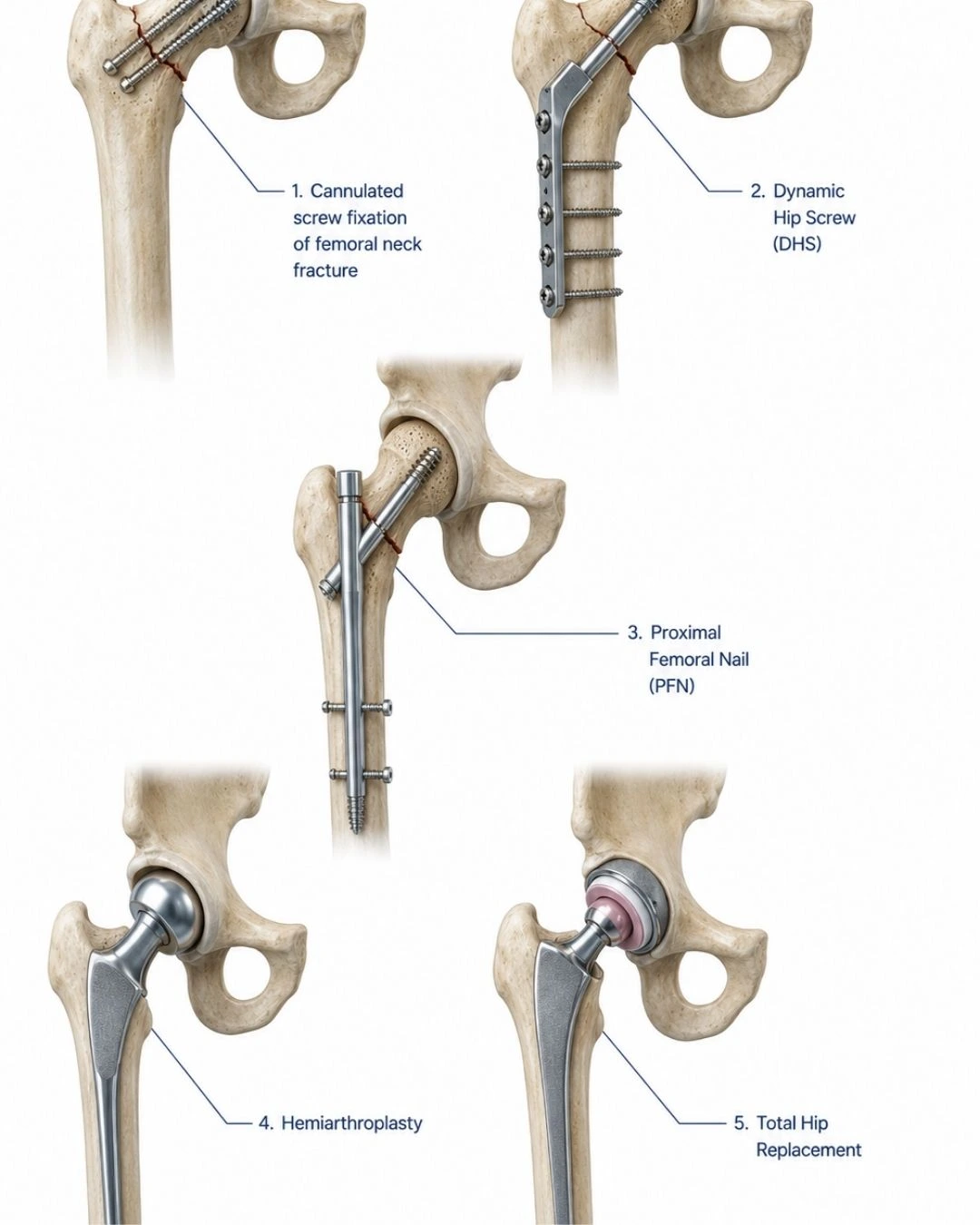
Cannulated screws are commonly used for selected femoral neck fractures where the bone fragments remain well aligned. Through small incisions, specialised screws are inserted across the fracture to hold the bone securely while it heals. Because this procedure preserves the patient's natural hip joint, it is often preferred for younger individuals and carefully selected older adults with stable fractures.
A Dynamic Hip Screw is frequently used for stable intertrochanteric fractures.The implant consists of a large screw placed into the femoral head, connected to a side plate fixed along the femur. Its design allows controlled compression across the fracture during healing, promoting stability while permitting gradual weight-bearing as advised by the surgeon.
A Proximal Femoral Nail is an intramedullary implant inserted through the centre of the femur.
It is commonly recommended for:
Because the implant sits within the bone, it provides excellent mechanical stability while minimising soft tissue disruption.
In some displaced femoral neck fractures, particularly in older adults with weaker bone, repairing the fracture may not provide predictable healing. A hemiarthroplasty replaces the damaged femoral head with an artificial implant while preserving the patient's natural socket. This procedure allows earlier mobilisation and avoids complications associated with disrupted blood supply to the femoral head.
When the fracture is associated with pre-existing arthritis, severe joint damage, or specific fracture patterns, a Total Hip Replacement may be the most appropriate option. Both the femoral head and the acetabulum are replaced with artificial components designed to restore joint movement and reduce pain. For carefully selected patients, total hip replacement offers excellent long-term function and mobility.
Surgery is only one part of hip fracture treatment. Rehabilitation is equally important for restoring movement, rebuilding strength, and helping patients return to everyday activities safely.Physiotherapy usually begins soon after surgery and progresses in stages based on the patient's recovery.
The initial focus is on:
These exercises help reduce complications associated with prolonged immobility.
As healing progresses, exercises become more challenging.
Patients work on:
The final stage of rehabilitation focuses on helping patients regain independence.
This includes:
Every rehabilitation programme should be tailored to the patient's age, medical condition, and functional goals.
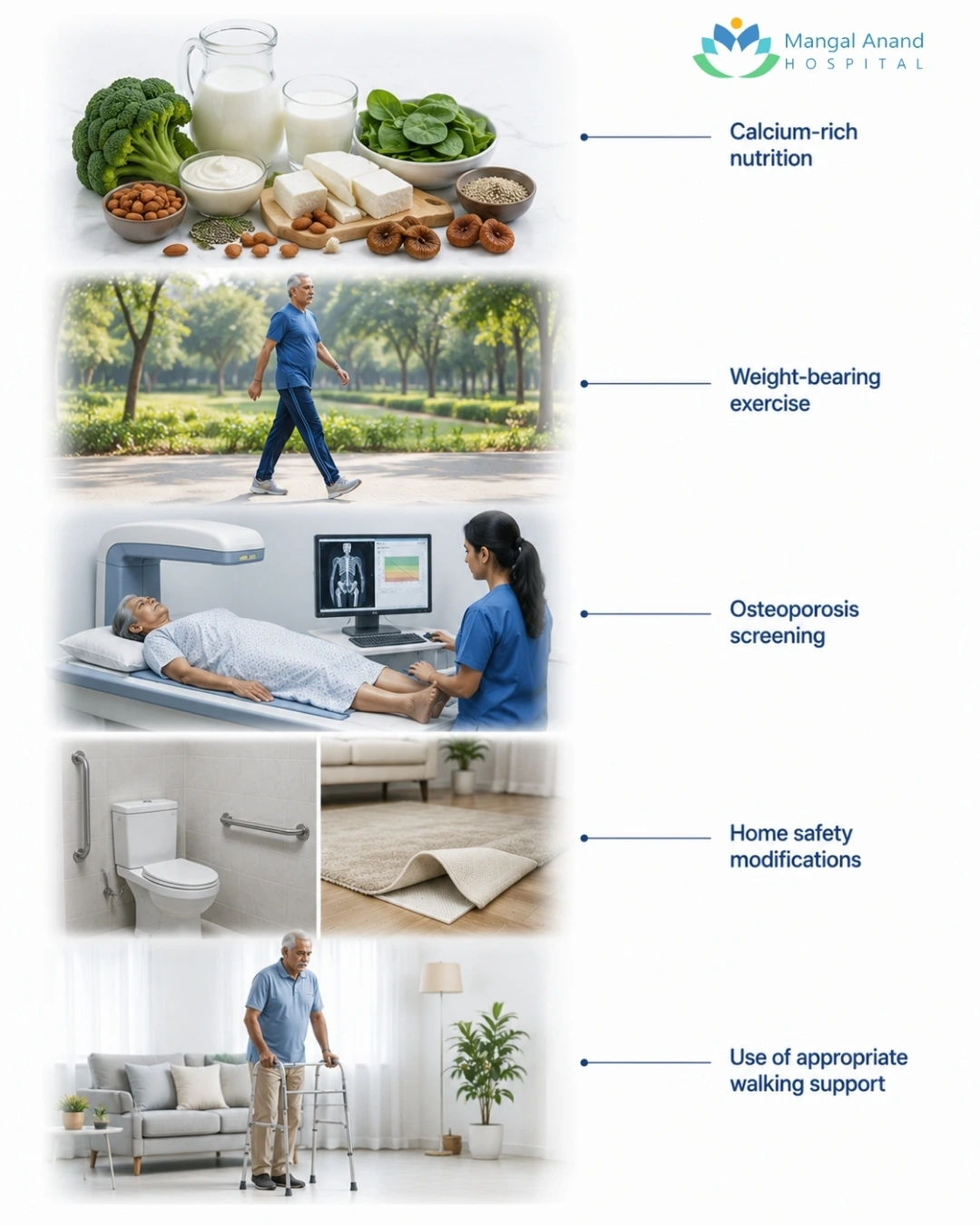
While not every hip fracture can be prevented, many can be avoided by maintaining healthy bones and reducing the risk of falls.
Good bone health begins long before a fracture occurs.
Important measures include:
People at risk of osteoporosis should discuss bone density testing with their doctor.
Simple home modifications can significantly reduce fall risk.
Consider:
Treating osteoporosis after a hip fracture is essential because it helps reduce the risk of future fractures.
Your doctor may recommend:
Hip fracture treatment requires more than simply repairing a broken bone. Successful outcomes depend on accurate diagnosis, thoughtful surgical planning, timely intervention, and structured rehabilitation.At Mangal Anand Hospital, patients receive comprehensive orthopaedic care that is tailored to the individual rather than a standard treatment pathway. Treatment decisions are based on the type of fracture, bone quality, age, activity level, and overall health to support safe recovery and early mobilisation.Patients are managed by experienced orthopaedic surgeons with expertise in hip disorders and trauma care. Dr. Milind Sawant has extensive experience in hip fracture repair, hip replacement, and revision hip surgery, while Dr. Pradip Nemade contributes specialised expertise in the management of complex orthopaedic trauma. Working alongside rehabilitation professionals, the team aims to restore mobility, reduce complications, and help patients return to their daily lives with confidence.
Most patients begin walking with assistance within a few days after surgery. Recovery generally takes several months, although complete rehabilitation may continue for up to a year depending on the fracture and the patient's overall health.
Not always. However, most hip fractures require surgery because it provides stability, reduces pain, and allows earlier mobilisation.
A hip fracture usually involves the upper part of the femur, whereas a pelvic fracture affects the bones of the pelvis. Although both occur near the hip, they are different injuries with different treatment approaches.
Many older adults regain good mobility with appropriate surgery and rehabilitation. Recovery depends on overall health, bone quality, pre-injury mobility, and commitment to physiotherapy.
Not every patient requires a hip replacement. The decision depends on the location of the fracture, blood supply to the femoral head, bone quality, age, and activity level.
Many patients begin standing or walking with assistance within one to two days after surgery, depending on the stability of the fracture and the surgeon's recommendations.
Yes. Osteoporosis weakens bones and increases the likelihood of future fractures. Assessment and treatment of osteoporosis are important parts of long-term care.
Seek immediate medical attention if you have severe hip or groin pain, cannot bear weight, or notice that the leg appears shortened or turned outward after a fall.
Hip Replacement Surgery
Revision Hip Replacement
Orthopaedic Trauma Care
Osteoporosis Management
Physiotherapy and Rehabilitation
Joint Replacement Surgery
Dr. Milind Sawant – Profile
Dr. Pradip Nemade – Profile