


If climbing stairs, standing up from a chair, or walking to the shop has started to hurt, you may be dealing with knee arthritis. It usually begins as mild stiffness and grows into pain that changes how you live.
At Mangal Anand Hospital in Chembur, our orthopaedic team helps you understand what is actually going on inside your knee, and then chooses treatment that fits your stage, your age, and how active you want to remain. That could mean physiotherapy and weight guidance, an injection, a joint-preserving surgery, or a knee replacement. The point is to match the treatment to the person, not the other way around.
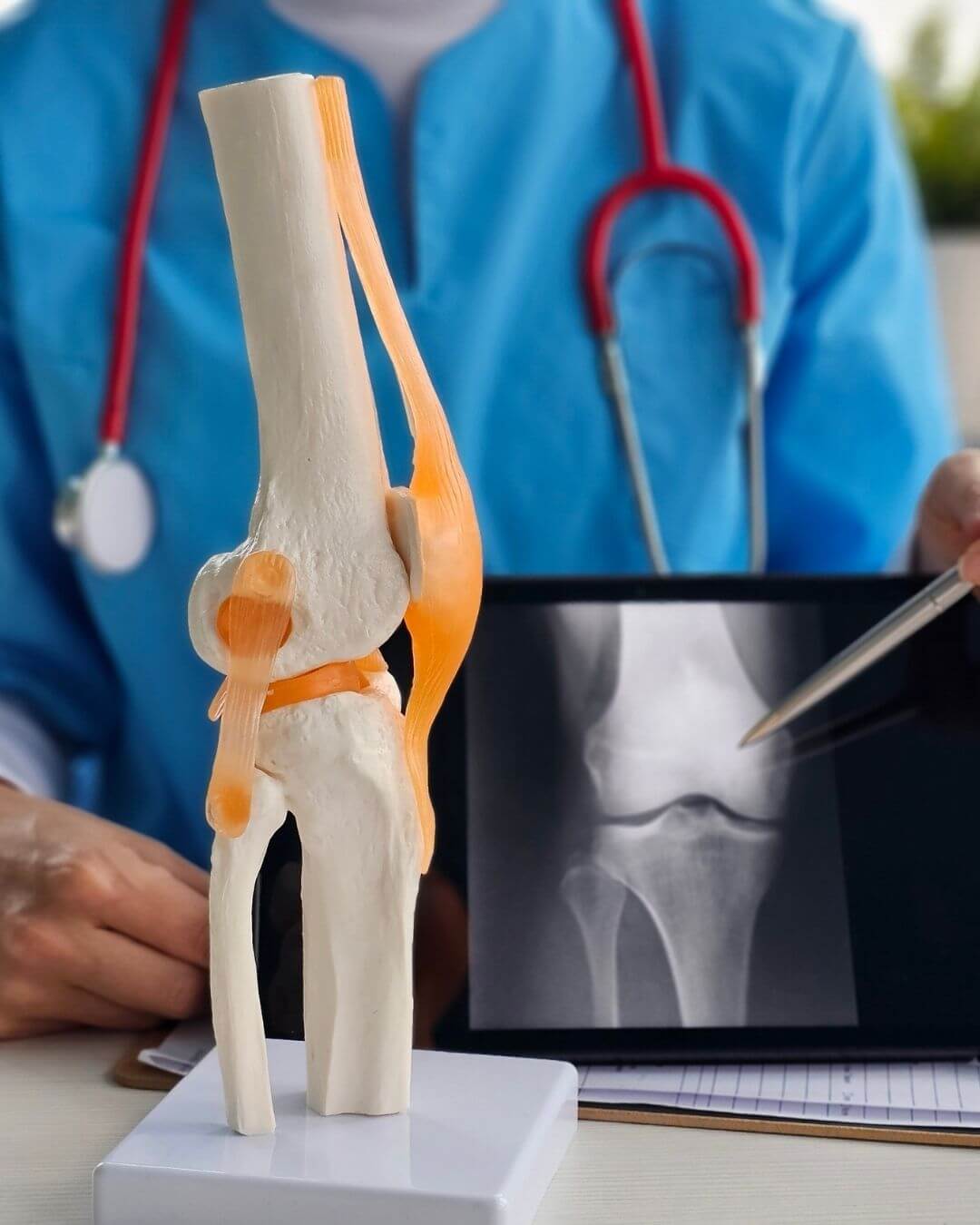
Your knee has a layer of smooth cartilage covering the ends of the bones. This cartilage lets the joint glide without friction. In arthritis, that cartilage wears down or gets damaged. Once it thins out, the bones start rubbing, the joint gets inflamed, and everyday movement becomes painful.
The most common form is knee osteoarthritis, which develops slowly with age, past injury, or excess load. Rheumatoid arthritis is different: it is an autoimmune condition where the immune system attacks the joint lining, often in both knees at once. Post-traumatic arthritis shows up years after an old ACL tear, meniscus injury, or fracture, even if the original problem was treated well at the time.
Age raises the risk, but arthritis is not just an old-age problem. A former athlete with a bad ACL injury, a person carrying extra weight, or someone with a family history can develop it much earlier.
Not every knee pain is arthritis. Meniscus tears, ligament injuries, tendon problems, and bursitis can all feel similar. Getting the diagnosis right is the first job, because the treatment for each is different.
Knee Arthritis symptoms build slowly. In the early stages, you might only notice discomfort after a long walk or a full day on your feet. Over time, it starts to interfere with normal life.
Early signs
Signs it has progressed
If pain has lasted more than a few weeks, is disturbing your sleep, or is stopping you from doing things you normally do, that is the point to get it examined. Early evaluation is what gives you the widest set of treatment options.
Orthopaedic surgeon with fellowship training in joint replacement, arthroscopy, and reconstructive knee surgery. Practices total and partial knee replacement, high tibial osteotomy, revision knee replacement, sports injury surgery, and complex knee reconstruction. Involved in research and academic teaching.

Orthopaedic surgeon with fellowship training in knee surgery, sports injuries, shoulder surgery, and revision joint replacement from centres in the United Kingdom. Practices knee replacement, revision knee replacement, arthroscopy, sports injury management, meniscal preservation, ligament reconstruction, and computer-assisted knee surgery.

Several things can damage the joint. Most patients we see have a mix of two or three.
Diagnosis is a clinical decision, not just a scan reading. Two patients with almost identical X-rays can have very different pain levels and need very different treatment. So we look at three things together: your story, the physical examination, and the imaging.
Clinical examination. Your surgeon watches you walk, checks alignment (bow legs, knock knees), tests how far the knee bends and straightens, feels for swelling and tenderness, and checks whether the ligaments are stable. This part often tells us more than the scan.
Standing X-ray. For most knee arthritis, this is the key test. It is done standing rather than lying down because body weight compresses the joint and shows the true amount of cartilage loss. A lying-down X-ray can miss significant wear.
MRI, only when needed. An MRI does not add much for straightforward osteoarthritis. We order it when we suspect a meniscus tear, a ligament injury, a cartilage defect, osteonecrosis, or a stress fracture. Ordering an MRI for every knee pain is not good medicine and often just adds cost.
Blood tests, when the pattern suggests inflammation. If you have swelling in multiple joints, prolonged morning stiffness, fever, or fatigue, we test for rheumatoid arthritis, gout, or infection. Osteoarthritis does not need blood tests.
Mild. Cartilage is thinning but still functional. Pain comes and goes. You can still walk and climb stairs, just with some discomfort. This stage responds well to physiotherapy, weight management, and modified activity. Surgery is not on the table yet.
Moderate. Cartilage loss is clear on the standing X-ray. Pain is more frequent, stairs are difficult, and walking distances start to shrink. Along with physiotherapy and weight guidance, we may add anti-inflammatory medication, a knee brace, or a targeted injection.
Advanced. The joint space has narrowed significantly, deformity may be visible, and pain interferes with sleep and daily life. This is where surgery becomes a real conversation, either joint preservation or replacement, depending on the pattern of damage.
Most patients in the early and moderate stages do not need surgery. Non-surgical treatment aims to reduce load on the joint, calm inflammation, and build the muscle support around the knee.
Weak thigh muscles make arthritis worse, because the joint absorbs more shock than it should. Strengthening the quadriceps, hamstrings, and hip muscles takes load off the joint itself. This is why physiotherapy is usually the first prescription, not painkillers. A structured programme includes strengthening, flexibility work, balance training, and correction of walking pattern. Done consistently, it reduces pain in a way medication alone cannot.
This is not about appearance. It is about mechanics. The knee bears several times your body weight with every step, so even a few kilos of weight loss meaningfully reduces the daily load on the joint. For patients above their ideal weight, this is often the single most useful thing they can do.
You do not have to stop being active. You just have to swap high-impact activities for lower-impact ones. Walking, swimming, cycling, and water exercises are usually well tolerated. Deep squats, running on hard surfaces, and jumping activities are the things to reduce.
Paracetamol and NSAIDs (like ibuprofen or diclofenac) can control pain during flare-ups. Topical anti-inflammatory gels are useful when you want to avoid oral medication. These help symptoms but do not repair cartilage, so they are part of the plan, not the whole plan. Long-term self-medication without supervision is not safe, especially for patients with kidney, stomach, or heart concerns.
An unloader brace can shift weight away from the worn side of the joint. A walking stick held in the opposite hand can reduce load through the painful knee by around a quarter. These are simple, low-cost tools that often get overlooked.
Considered when other conservative measures are not giving enough relief.
Surgery is discussed when pain is persistent, walking distance keeps shrinking, sleep is disturbed, or non-surgical treatment has stopped working. The choice of procedure depends on which part of the knee is worn, your alignment, ligament condition, age, and how active you want to be after.
Useful when arthritis is limited to one side of the knee (usually the inner side) and the leg is bow-shaped. Instead of replacing the joint, we reshape the top of the shin bone so that body weight shifts to the healthy side of the knee. The natural joint is preserved. This is often the right choice for younger, active patients who want to delay replacement.
When only one compartment of the knee is worn and the ligaments are intact, we replace only that part. The rest of the knee, including healthy cartilage and ligaments, is left alone. Recovery is quicker than a full replacement, and the knee usually feels more natural because most of the joint is still yours.
For advanced arthritis affecting multiple parts of the joint, the damaged surfaces are replaced with metal and plastic components that recreate smooth movement. Most patients get significant pain relief and can walk comfortably again. It remains the most reliable long-term solution for advanced arthritis.
Robotic assistance helps with more accurate implant positioning and alignment. The surgeon still performs the surgery; the robot is a planning and guidance tool. The reason to use it is precision, especially for partial replacements and complex cases where a millimetre matters.
Arthroscopy is not a treatment for osteoarthritis itself. Studies have shown it does not help long-term when the underlying problem is worn cartilage. It has a role for specific mechanical problems, such as a locked knee from a meniscus fragment or a loose body inside the joint. Learn more about Knee Arthroscopy
Some patients need a previously replaced knee redone, usually years later, because of wear, loosening, or infection. This is a more technically demanding surgery and needs careful planning.
Recovery is where a lot of surgical outcomes are actually decided. The operation restores the joint mechanics; rehabilitation restores your ability to use it.
After surgery, you will start gentle movement within a day, usually with support. Physiotherapy focuses on regaining knee bend, building strength around the joint, and getting you walking confidently. Most patients climb stairs comfortably within a few weeks and return to routine activity over two to three months. Return to driving, work, and exercise depends on which knee was operated on and what you do for a living, and your surgeon will guide the timing.
Skipping physiotherapy is the most common reason for a slower recovery. It is worth taking seriously.
A few habits reduce daily strain on your knees:
We do not default to surgery. Most patients we see leave with a non-surgical plan. When we do recommend surgery, it is because the alternatives have been tried or clearly will not help.
We consider joint preservation first. In suitable patients, an HTO or a partial knee replacement can protect the natural joint for years. We look at these options before jumping to a full replacement.
Both knees, both hands. The team performs the full range of knee surgery, from arthroscopic procedures to complex revisions, so the recommendation is based on what your knee needs, not on what the surgeon is comfortable with.
Rehabilitation is part of the treatment. Physiotherapy is not an afterthought. It is coordinated with your surgeon from day one.
Patients travel to Mangal Anand Hospital from Chembur, Ghatkopar, Sion, Kurla, Tilak Nagar, Govandi, Wadala, Mankhurd, Vashi and other parts of Mumbai and Navi Mumbai.
Osteoarthritis is the most common cause of knee arthritis. It develops gradually as the protective cartilage covering the ends of the bones wears down over time. Ageing, obesity, previous knee injuries and genetics can all increase the risk of developing osteoarthritis.
Early symptoms may include:
Early diagnosis allows treatment to begin before symptoms become more severe.
There is currently no cure that restores damaged joint cartilage. However, many treatments can effectively reduce pain, improve mobility and help patients continue their normal activities.
Diagnosis is based on:
Your orthopaedic surgeon combines these findings to determine the severity of arthritis and recommend appropriate treatment.
Not always.
Standing weight-bearing X-rays are often sufficient to diagnose osteoarthritis.
An MRI may be recommended if your doctor suspects:
No.
Appropriate low-impact exercise is an important part of treatment.
Regular exercise helps:
Exercises should be tailored to your condition under the guidance of your healthcare team.
Commonly recommended activities include:
High-impact activities may not be suitable for everyone.
Yes.
Maintaining a healthy body weight reduces stress on the knee joint and may improve pain, mobility and overall function.Even modest weight loss can significantly reduce the load placed on the knees during everyday activities.
You should seek medical advice if:
Early assessment allows timely diagnosis and treatment.
No.
Many patients improve with:
Surgery is considered only when symptoms significantly affect quality of life and non-surgical treatments are no longer effective.
Recovery varies between individuals. Factors influencing recovery include:
Your surgeon will provide guidance based on your individual progress.
Yes. Although osteoarthritis becomes more common with age, younger individuals may develop arthritis following sports injuries, ligament tears, fractures or inflammatory joint diseases.
For many patients, yes.Walking is a low-impact activity that helps maintain joint mobility and muscle strength.However, walking programmes should be adjusted according to the severity of arthritis and your doctor's advice.
Yes. Osteoarthritis and rheumatoid arthritis can affect one or both knees. The severity may differ between the two sides.
Knee replacement may be considered when:
The decision is based on symptoms, function and imaging—not X-rays alone.
Without appropriate management, knee arthritis may gradually progress, leading to:
Early treatment may help reduce symptoms and preserve joint function.
An orthopaedic surgeon specialises in diagnosing and treating conditions affecting the bones, joints and ligaments, including knee arthritis.Depending on your condition, treatment may involve non-surgical management, rehabilitation or surgical procedures.
No. Many patients successfully manage knee arthritis with conservative treatment for years.
Surgery is recommended only when the expected benefits outweigh the risks and non-surgical treatment no longer provides sufficient improvement.
Patients visiting this page may also find the following services useful: